
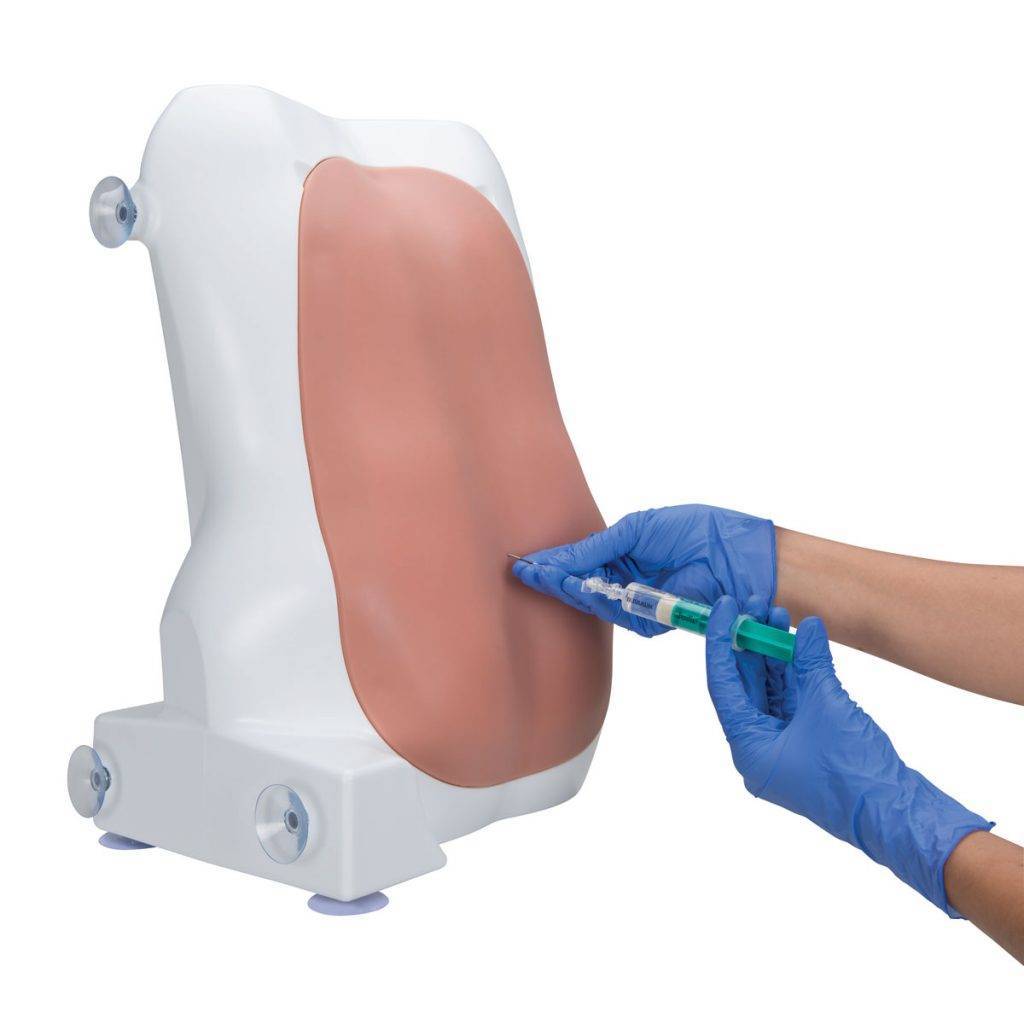
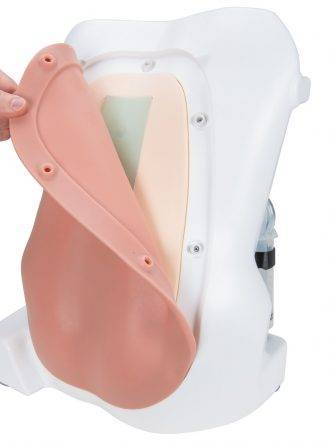
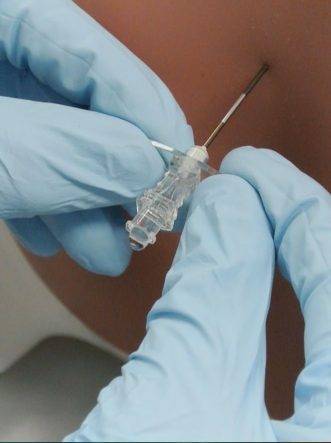
Description
- epidural anesthesia using the loss-of-resistance and the hanging-drop technique
- spinal anesthesia with realistic resistance of the dura and arachnoid mater with or without a cannula
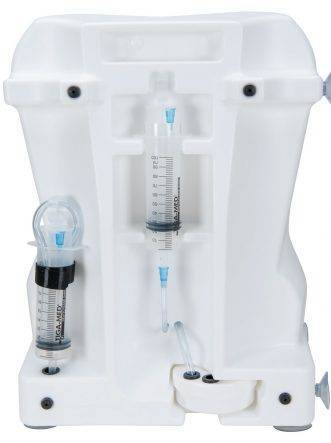
- fluid-filled spinal canal with realistic outflow rate thanks to the ability to adjust the excess pressure
- an epidural catheter can be inserted into the epidural space
- closed water system
- easy to clean
Why Choose the 3B Scientific Epidural and Spinal Injection Trainer (P61) for Your Anaesthesiology or Obstetric Training Programme in India?
The Epidural and Spinal Injection Trainer (Item No. 1017891 / P61) is a high-fidelity procedural training simulator from 3B Scientific, Germany — developed in close cooperation with epidural anaesthesia specialists and manufactured entirely in Germany to the highest simulation fidelity standards. Designed for anaesthesiology residents, obstetric anaesthesia fellows, pain management trainees, and clinical skills centres in India, the P61 delivers the most realistic haptic feedback experience available in a lumbar regional anaesthesia trainer — replicating the tissue resistance, loss-of-resistance endpoint, and CSF outflow characteristics that define safe epidural and spinal technique.
Epidural anaesthesia is the gold standard for labour analgesia in Indian tertiary hospitals and increasingly the preferred technique for obstetric, orthopaedic, and major abdominal surgery. Spinal anaesthesia is one of the most frequently performed procedures by Indian anaesthesiologists across all levels of the health system. Both carry significant risk — dural puncture, neural injury, wrong-space injection — making structured simulation-based training before patient contact an essential component of anaesthesiology residency and subspecialty training under NMC competency frameworks.
Two Regional Anaesthesia Techniques — One Trainer:
Epidural Anaesthesia:
- Loss-of-Resistance (LOR) technique — the standard needle advancement and syringe compression technique for identifying the epidural space. The P61 replicates the distinct tactile transition from ligamentum flavum resistance to loss-of-resistance in the epidural space — the exact haptic moment that defines safe epidural entry.
- Hanging-Drop technique — the negative-pressure epidural space identification technique used as an alternative to LOR. The P61 includes a dedicated extension tube for hanging-drop practice — one of very few simulators that supports both techniques.
- Epidural catheter insertion — a catheter can be threaded into the epidural space through the needle after space identification, training the complete procedure end to end.
Spinal Anaesthesia:
- Realistic resistance of the dura mater and arachnoid mater with or without introducer cannula, replicating the tactile sequence of dural puncture and needle advancement into the subarachnoid space.
- A fluid-filled spinal canal with adjustable excess pressure controls the CSF outflow rate after dural puncture — replicating the realistic free-flow confirmation that confirms correct subarachnoid placement.
Closed Water System — Low Running Cost:
The P61 uses a fully closed water circuit — all fluid injected during training is recirculated within the system. No consumable fluids need to be restocked between sessions, and the system is easy to clean and reset. This closed design gives the P61 among the lowest ongoing operating costs of any fluid-based regional anaesthesia trainer.
Compact and Portable:
At 4.9 kg and 45 × 35 × 24 cm, the P61 is light enough for transport between training rooms, skills labs, and simulation centres. A carry bag (Item No. 1018079) is included in the standard delivery.
Complete Delivery Contents:
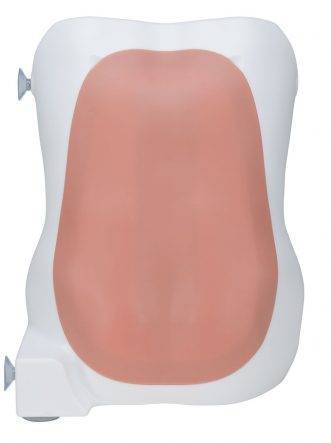
1× base body, 1× vertebral bar, 1× LOR insert (loss-of-resistance), 1× skin, 1× spinal canal with connector, 1× water collection container, 1× 10 cm tube, 2× 100 ml syringes with cap, 1× spacer ring for injection, 1× extension tube for hanging-drop technique, 1× carry bag.
Why Buy from SEM Trainers?
SEM Trainers & Systems has over 30 years of experience supplying medical simulators to 1,500+ institutions across 28 states in India. We provide pan-India delivery, on-site installation, faculty orientation, and dedicated after-sales support. For anaesthesiology department or obstetric anaesthesia unit procurement, contact us for institutional pricing.
Q: What two regional anaesthesia techniques does this trainer support?
A: Epidural anaesthesia — both loss-of-resistance (LOR) and hanging-drop techniques — and spinal anaesthesia with realistic dural and arachnoid resistance and adjustable CSF outflow. Both techniques are trainable on the same simulator.
Q: What is the loss-of-resistance technique and how does the P61 replicate it?
A: The loss-of-resistance technique involves advancing an epidural needle through the ligamentum flavum while applying continuous pressure to a syringe. Resistance is felt as the needle passes through the ligament — then suddenly disappears (loss of resistance) when the needle enters the epidural space. The P61 replicates this exact haptic transition using high-quality materials validated with epidural anaesthesia specialists, providing a clinically credible tactile endpoint.
Q: Can an epidural catheter be inserted through the needle in this trainer?
A: Yes. After epidural space identification, a catheter can be threaded into the epidural space through the needle, training the complete epidural procedure including catheter placement.
Q: Does this trainer support the hanging-drop technique?
A: Yes — a dedicated extension tube for hanging-drop epidural space identification is included in the standard delivery. This is one of very few regional anaesthesia trainers that supports both LOR and hanging-drop techniques.
Q: How does the closed water system work?
A: All fluid used during training circulates within the closed system — no fluid is wasted or needs restocking between sessions. After training, the system is drained and cleaned easily. This makes the P61 one of the lowest running-cost fluid-based regional anaesthesia trainers available.
Q: Is a carry bag included?
A: Yes — the carry bag (Item No. 1018079) is included in the standard delivery. A replacement carry bag is available separately from SEM Trainers.
Q: What is the difference between this trainer and the Lumbar Spinal Injection Kit (3011955)?
A: The P61 trains both epidural (LOR and hanging-drop) and spinal anaesthesia on a full closed water system with adjustable CSF pressure — it is the premium high-fidelity regional anaesthesia trainer. The Lumbar Spinal Injection Kit (3011955) focuses on lumbar spinal injection technique. Both are available from SEM Trainers; the P61 is recommended for anaesthesiology departments requiring full epidural and spinal training capability.
Delivery contents:
The epidural and spinal injection trainer (P61) includes:
1 x base body
1 x vertebral bar
1 x LOR insert (loss-of-resistance)
1 x skin
1 x spinal canal with connector
1 x water collection container
1 x 10 cm tube
2 x 100 ml injections with cap
1 x spacer ring for injection
1 x extension tube for the hanging-drop technique
1x carry bag
Reviews
There are no reviews yet.