
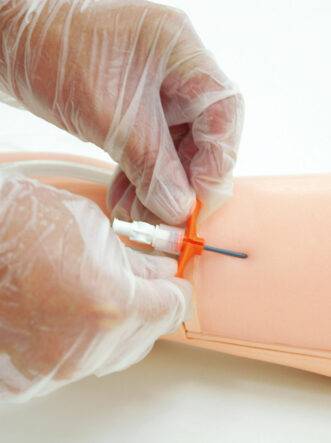
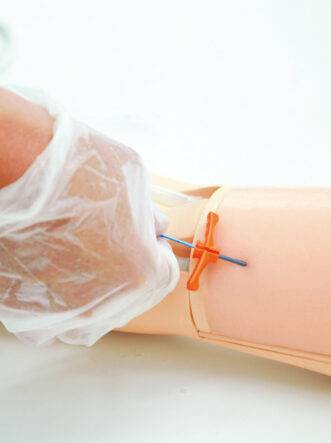
Description
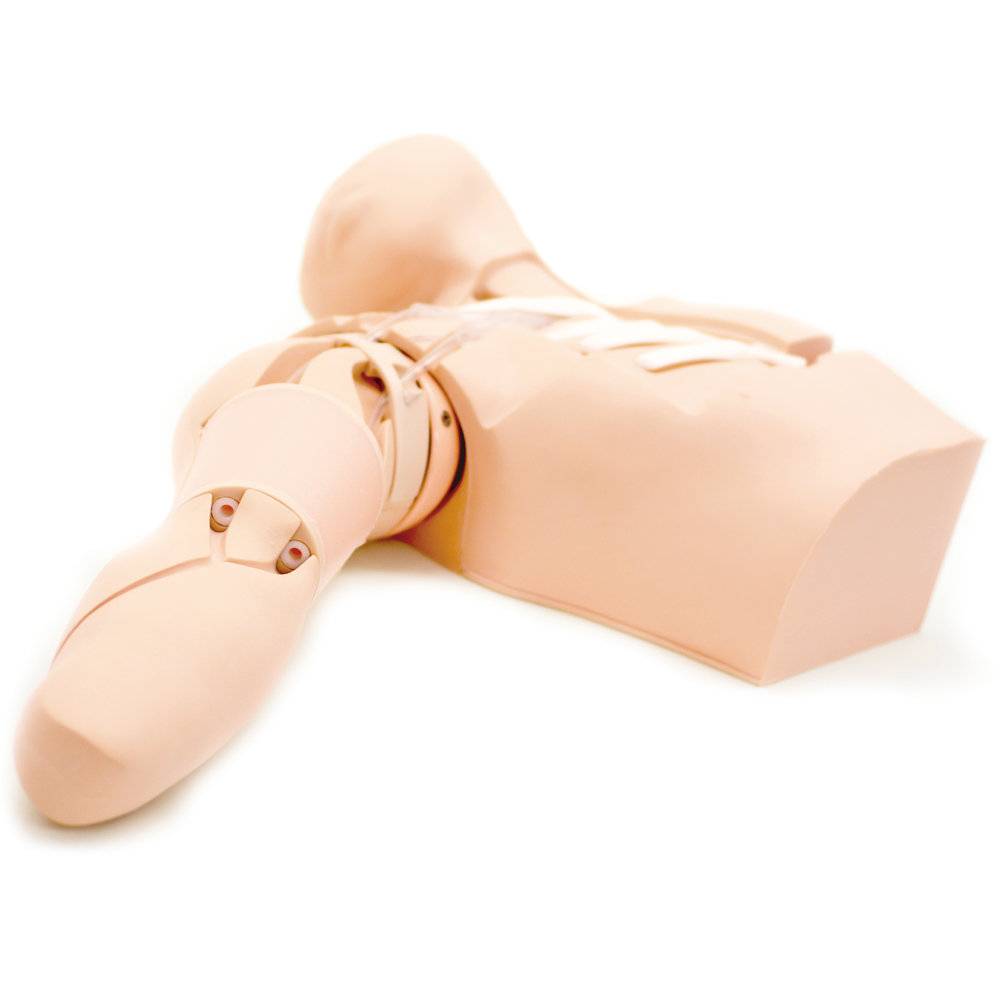
New, innovative, human-like material for perfect visualization / A non-complicated design with replaceable puncture site and anatomically accurate features including the rib cage, sternum, bifurcation, plus visible tip placement in the superior vena cava.
| Features | 1. Movable shoulder to demonstrate positioning 2. Realistic flashback in needle provides confirmation for successful venous access 3. Ribs and right clavicle provide anatomical understanding of correct PICC placement |
|---|---|
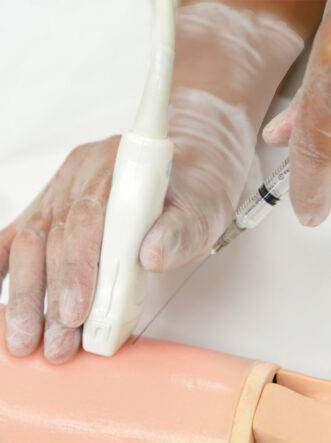
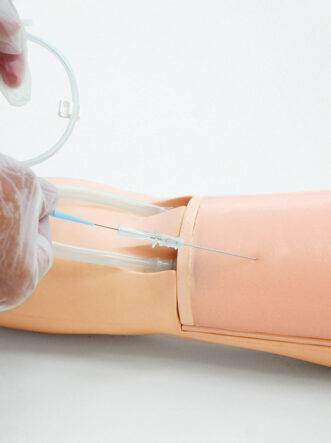
| Training skills / Applications | Ensure patient comfort and position Hand hygiene and prepare sterile field Identify puncture site Ultrasound-guided insertion Insertion of dilator and guide wire Insertion of sheath Insertion of catheter |
| Set includes | 1 male upper torso with the right arm 2 PICC puncture pads 1 simulated blood (swab type) 1 jar 1 syringe 1 instruction manual 1 storage case |
| Size (approx.) | W79 x D38 x H18cm / W31 x D14.9 x H7in |
| Packing size (approx.) | W74 x D48 x H24cm/W29 x D19 x 9.5in |
| Weight (approx.) | 4.5kg / 10lb |
| Packing weight (approx.) | 8.6kg / 19lb |
| Materials | Soft resin, hard resin / Latex free |
| Replacement parts | 11398-010 2 PICC puncture pads |
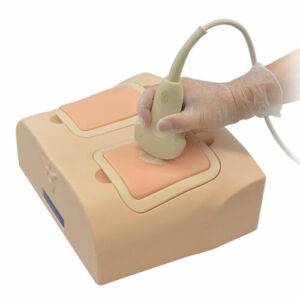
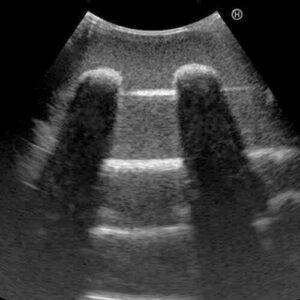
| Optional parts | 11347-210 2 introductory ultrasound training blocks |
| Related products | M93C CVC Insertion Simulator III M93UB CVC Insertion Simulator II |
| Production & Development Supervision | Joho Tokumine, M.D., Ph.D., Department of Anesthesiology, Kyorin University School of Medicine |
| Recommended Devices | PICC catheter 4Fr, 50-60cm |
| Update | October 15, 2020 |
Ultrasound-Guided PICC Training Simulator (MW18) — Peripherally Inserted Central Catheter Placement Training
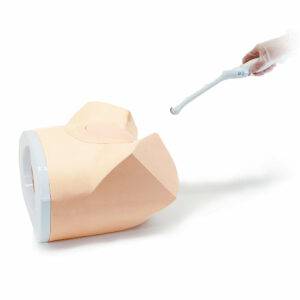
The Ultrasound-Guided PICC Training Simulator (Item No. MW18, 4.5 kg) by Kyoto Kagaku, Japan is built with innovative, human-like material for exceptional ultrasound visualization, giving students a realistic platform to master ultrasound-guided PICC (peripherally inserted central catheter) line placement from puncture to final catheter positioning.
Anatomically accurate landmarks, simply designed. A non-complicated design includes anatomically accurate features — the rib cage, sternum, and vessel bifurcation — plus visible tip placement in the superior vena cava, so instructors can confirm correct final catheter position, not just correct initial puncture technique.
Realistic positioning and confirmation feedback. A movable shoulder lets instructors demonstrate proper patient positioning before insertion, while realistic flashback in the needle confirms successful venous access — the same visual cue clinicians rely on during a real procedure. Ribs and the right clavicle give students a clear anatomical reference for correct PICC placement technique.
Trains the complete procedural workflow, start to finish: ensuring patient comfort and positioning, hand hygiene and sterile field preparation, puncture site identification, ultrasound-guided insertion, dilator and guide wire insertion, sheath insertion, and catheter insertion.
Built for repeated classroom use. The puncture site is replaceable, so a worn insertion pad can be swapped out without replacing the full torso simulator — keeping ongoing costs proportional to actual usage.
What’s included: male upper torso with right arm, 2 PICC puncture pads, simulated blood (swab type), jar, syringe, instruction manual, storage case.
Recommended device: PICC catheter, 4Fr, 50–60cm.
Replacement and optional parts available: replacement PICC puncture pads (2-pack), and optional introductory ultrasound training blocks for students building foundational scanning skills before moving to the full simulator.
Developed under supervision of Joho Tokumine, M.D., Ph.D., Department of Anesthesiology, Kyorin University School of Medicine.
Why Buy from SEM Trainers? SEM Trainers & Systems is an authorised distributor of Kyoto Kagaku products in India with over 30 years of experience supplying medical simulators and clinical skills trainers to 1,500+ institutions across 28 states. We provide pan-India delivery and dedicated after-sales support.
Frequently Asked Questions
Q: Is the puncture site replaceable, or do we need to replace the whole simulator when it wears out?
A: Just the puncture site — replacement PICC puncture pads are available separately, so the torso simulator itself doesn’t need replacing.
Q: What catheter size is recommended?
A: A 4Fr PICC catheter, 50–60cm length.
Q: Can beginners practice basic ultrasound scanning before attempting the full procedure?
A: Yes — optional introductory ultrasound training blocks are available for foundational scanning practice before moving to full PICC placement on the simulator.
Contact us at [email protected] or call +91-88495 63724 for pricing and availability.
Reviews
There are no reviews yet.