
Description
This is the most clinically advanced card in the whole session — genuinely specialist content, and I want to flag the audience mismatch risk before it gets marketed like the others.
[Cert] Item No. 1018193 [W49421], MPN ST2M-114, 0.07 kg, 16×7×2 cm, compatible with W49407. Two typos I’m correcting: “meneuver” → maneuver, “valsala” → Valsalva. “LICS” (left intercostal space) is a legitimate clinical abbreviation, not an error.
[Cert] This card is built entirely around dynamic maneuver auscultation for hypertrophic cardiomyopathy (HCM) — handgrip, Valsalva strain, leg raise, squat-to-stand transition, and their effect on murmur intensity at the apex versus the 4th left intercostal space — plus a restrictive cardiomyopathy/atrial fibrillation presentation. This is genuinely advanced cardiology content: understanding how HCM murmurs paradoxically increase with maneuvers that decrease preload (Valsalva strain, standing) — the opposite of most murmurs — is a fellowship-level or advanced internal medicine teaching point, not an undergraduate nursing or basic MBBS auscultation skill.
I disagree with marketing this the same way as the Basic Murmurs or Breath Sounds cards. Here’s what I’d do instead: pitch this explicitly at cardiology training centres, internal medicine residency programs, and advanced clinical skills labs — not blanket “nursing and medical colleges” language like the more foundational cards. The risk of generic positioning is a buyer purchasing this for a basic undergraduate lab where it’s the wrong teaching tool, then being unhappy when trainees can’t use it meaningfully.
Why Choose the Cardiomyopathies Sound Menu for Advanced Cardiology Training in India?
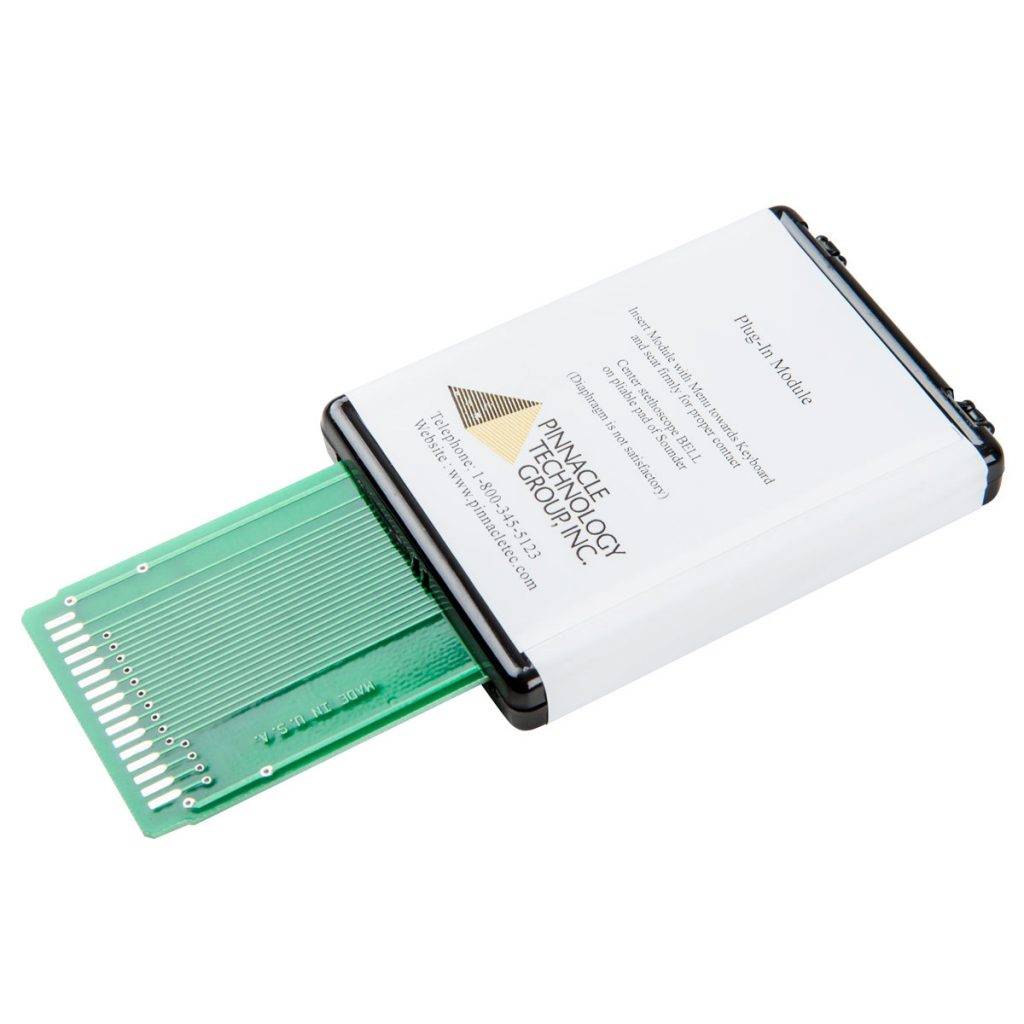
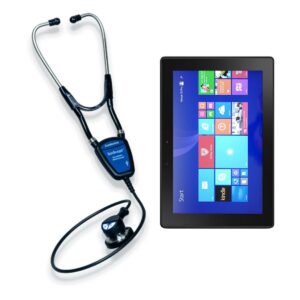
The Cardiomyopathies Sound Menu (Item No. 1018193 / W49421, MPN: ST2M-114, 0.07 kg, 16 × 7 × 2 cm) by Nasco Healthcare, USA is a 16-sound advanced auscultation card for the W49407 simulator, focused specifically on hypertrophic cardiomyopathy (HCM) diagnosed through dynamic bedside maneuvers.
Unlike basic murmur recognition, HCM auscultation depends on how the murmur changes with preload and afterload manipulation — and often behaves opposite to how trainees expect. This card walks through that logic systematically: apex sounds during handgrip (increases afterload), supine positioning, leg raise, squatting, and standing-after-squatting; then 4th LICS sounds during Valsalva strain, both with basic auscultation and with apexcardiogram correlation; a latent HCM presentation with hypertension; apical HCM with left bundle branch block; and a restrictive cardiomyopathy case with atrial fibrillation.
This card is best suited to cardiology fellowship programs, advanced internal medicine residency training, and specialized cardiac auscultation electives — it assumes trainees already have solid foundational murmur-timing skills (see our Basic Murmurs Sound Menu) before tackling dynamic maneuver interpretation.
Why Buy from SEM Trainers? SEM Trainers & Systems is an authorized distributor of Nasco Healthcare products in India with over 30 years of experience supplying medical simulators and auscultation training accessories to 1,500+ institutions across 28 states. We provide pan-India delivery and dedicated after-sales support.
Q: Is this suitable for undergraduate nursing or MBBS training?
A: This card covers advanced HCM auscultation and dynamic maneuver interpretation — it’s best used after foundational murmur-timing skills are established, typically at the residency or fellowship level.
Q: What does “4 LICS” mean?
A: 4th left intercostal space — a standard cardiac auscultation site, particularly relevant for detecting the murmur of hypertrophic obstructive cardiomyopathy.
Q: Which simulator is this compatible with?
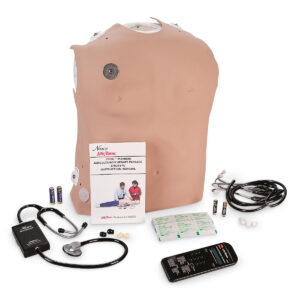
A: The W49407 auscultation simulator by Nasco Healthcare.
Q: How do I order from SEM Trainers?
A: Contact us at [email protected] or call +91-88495 63724 for pricing and availability.
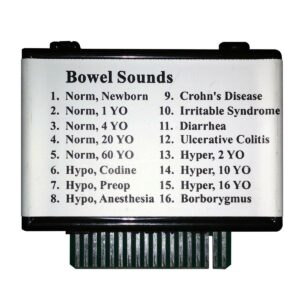
Cardiomyopathies Sound Menu – Auscultation Sounds for W49407
1. Apex control for hand grip
2. Apex hand grip
3. Apex control (supine) for maneuvers
4. Apex legs raised
5. Apex squatting
6. Apex standing after squatting
HCM – valsalva meneuver
7. 4 LICS control
8. 4 LICS valsalva strain
HCM – valsalva, Apexcardiogram
9. 4 LICS control
10. 4 LICS valsala strain
11. Apex
HCM – (latent) with hypertension
12. 4 LICS control
13. 4 LICS valsalva strain
Apical HCM, LBBB
14. Apex
15. Apex respirations, paradoxical splitting
Restrictive cardiomyopathy, Atrial fibrillation
16. Apex
Reviews
There are no reviews yet.