
Description
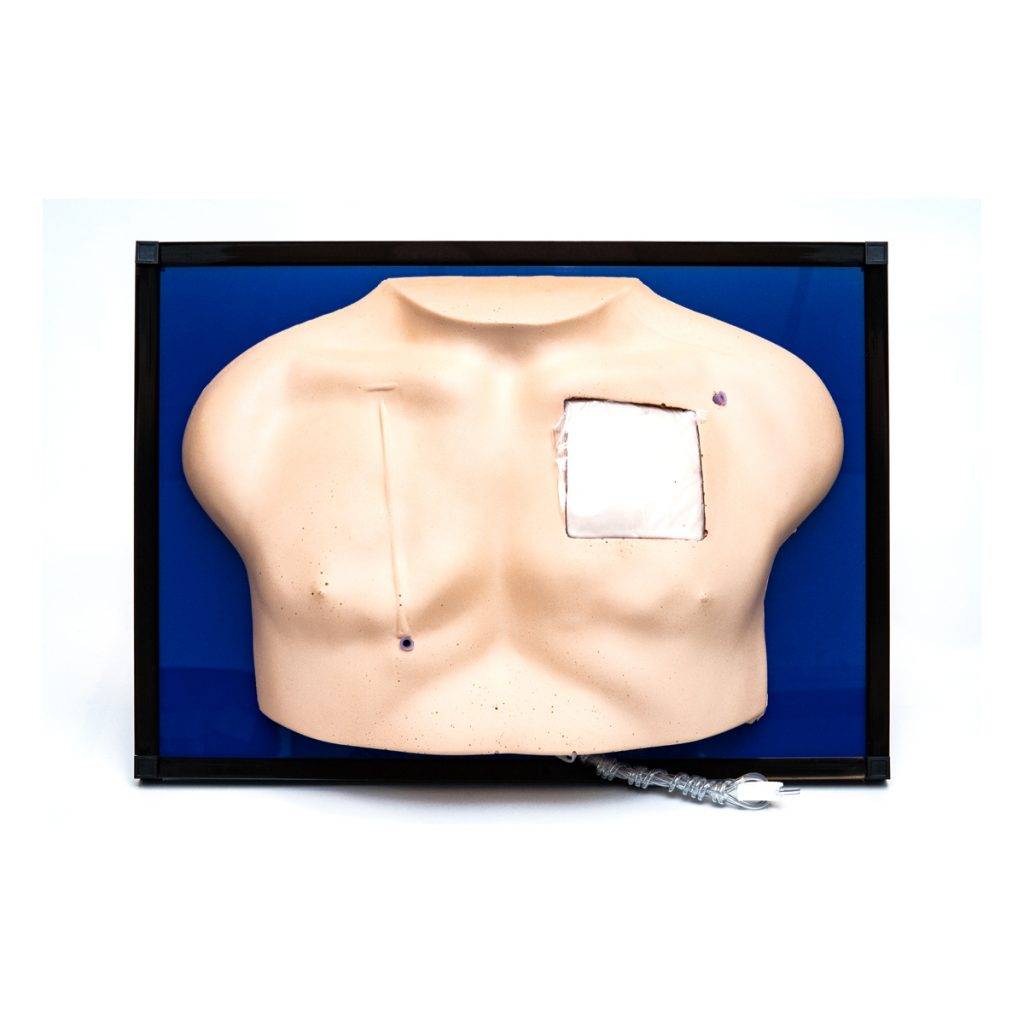
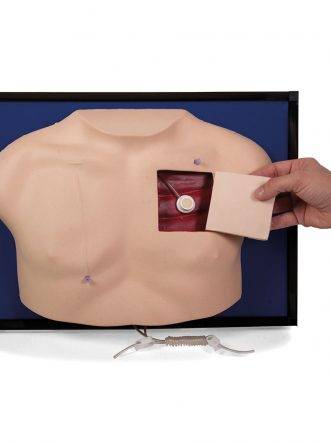
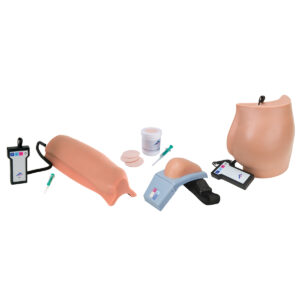
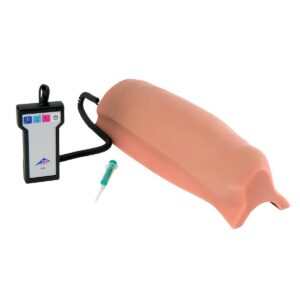
Teach patients and healthcare staff the care and use of two different types of catheters with this model. Features left and right subclavian catheter connections that may be flushed with water; implanted venous access system with a “skin” flap over the implant to allow viewing. Made of skinned, lightweight urethane foam, this model may be washed with soap and water, or painted with antiseptics.
Mounted on a collapsible easel and packed in its own carrying case (Replacement door W43008).
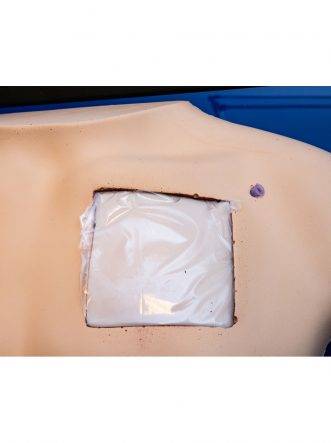
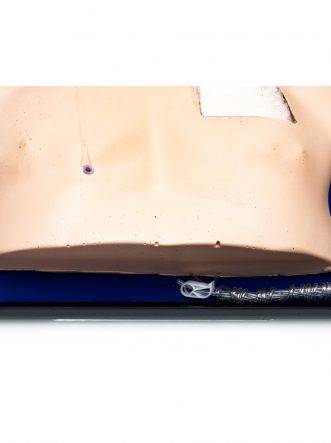
Caution! Skin might contain bubbles, please refer to the pictures. However, this does not influence the functionality of the simulator.
Why Choose the Deluxe Venous Access Device Model for Your Oncology, PICU, or Nursing Education Programme in India?
The Deluxe Venous Access Device Model (Item No. 1005563 / W43007, MPN: 26124) is a chest wall education model from Health Edco / WRS Group, USA — designed for nursing staff education, patient orientation, and oncology care training in Indian hospitals, cancer centres, dialysis units, and nursing colleges where central venous catheter care competency is a clinical and patient safety requirement.
As central venous access devices become standard of care in Indian oncology, PICU, and long-term IV therapy settings — including subclavian catheters and implanted ports for chemotherapy, TPN, and haemodialysis — the gap between device insertion and safe ongoing care is a critical nursing education priority. The 26124 model gives nursing staff a hands-on demonstration platform and gives patients a tangible, easy-to-understand visual explanation of what has been implanted in their body and how it will be cared for — the two most important conversations in central line management.
Two Central Venous Access Types on One Model:
1. External Subclavian Catheters — Left and Right:
The model features both left and right subclavian catheter connection points that can be flushed with water, allowing nursing staff to demonstrate and practise the flushing technique, line clamping, and catheter care steps for external central lines. Both connection points are present on the same model, enabling comparison between left and right access and training on which side is active in a given patient.
2. Implanted Venous Access Port (VAD / Port-a-Cath):
A subcutaneous implanted port reservoir is embedded in the model beneath a lifting skin flap. The flap opens to expose the implanted port, allowing nursing staff to show patients exactly where the device sits, what it looks like, and how it is accessed — the single most anxiety-reducing demonstration in port patient education. The skin flap can be closed to simulate a healed implant site for needle access demonstration.
Durable, Washable Construction:
The model is made from lightweight, skinned urethane foam — soft and realistic to the touch, washable with soap and water, and compatible with antiseptic painting for infection control training and demonstration. Mounted on a collapsible easel for upright presentation at the bedside, in a clinic room, or in a classroom setting. Packed in its own carrying case for storage and transport.
Replacement part: Replacement door/case available as W43008. Contact SEM Trainers for availability.
Note: Skin may contain minor air bubbles (visible in product images). This does not affect the model’s functionality or educational use.
Why Buy from SEM Trainers?
SEM Trainers & Systems has over 30 years of experience supplying health education and clinical training models to 1,500+ institutions across 28 states in India. We provide pan-India delivery and dedicated after-sales support.
Frequently Asked Questions
Q: What two types of central venous access devices does this model demonstrate?
A: External subclavian catheters (left and right connection points, both flushable with water) and an implanted venous access port (Port-a-Cath/VAD), which is visible beneath a lifting skin flap. Both types are present on the same model.
Q: Is this model for patient education or clinical skills training?
A: Primarily patient education and nursing staff orientation — it is designed to explain and demonstrate central venous catheter care to patients and to train nursing staff in patient communication about central line management. It does not train catheter insertion technique.
Q: Can the catheters be flushed with actual fluid?
A: Yes — the left and right subclavian catheter connection points can be flushed with water, allowing demonstration of the flushing procedure used in actual clinical central line maintenance.
Q: Is the model washable?
A: Yes. The urethane foam construction is washable with soap and water and can also be painted with antiseptics for infection control demonstration purposes.
Q: What does the skin flap over the implanted port do?
A: It lifts to expose the implanted port reservoir beneath, allowing the instructor to show the patient exactly where the device is located under the skin and how it is accessed. It closes back down to simulate a healed implant site.
Q: What is the replacement part reference for the carrying case?
A: The replacement door/case is W43008. Contact SEM Trainers for availability and pricing.
Reviews
There are no reviews yet.