
Description
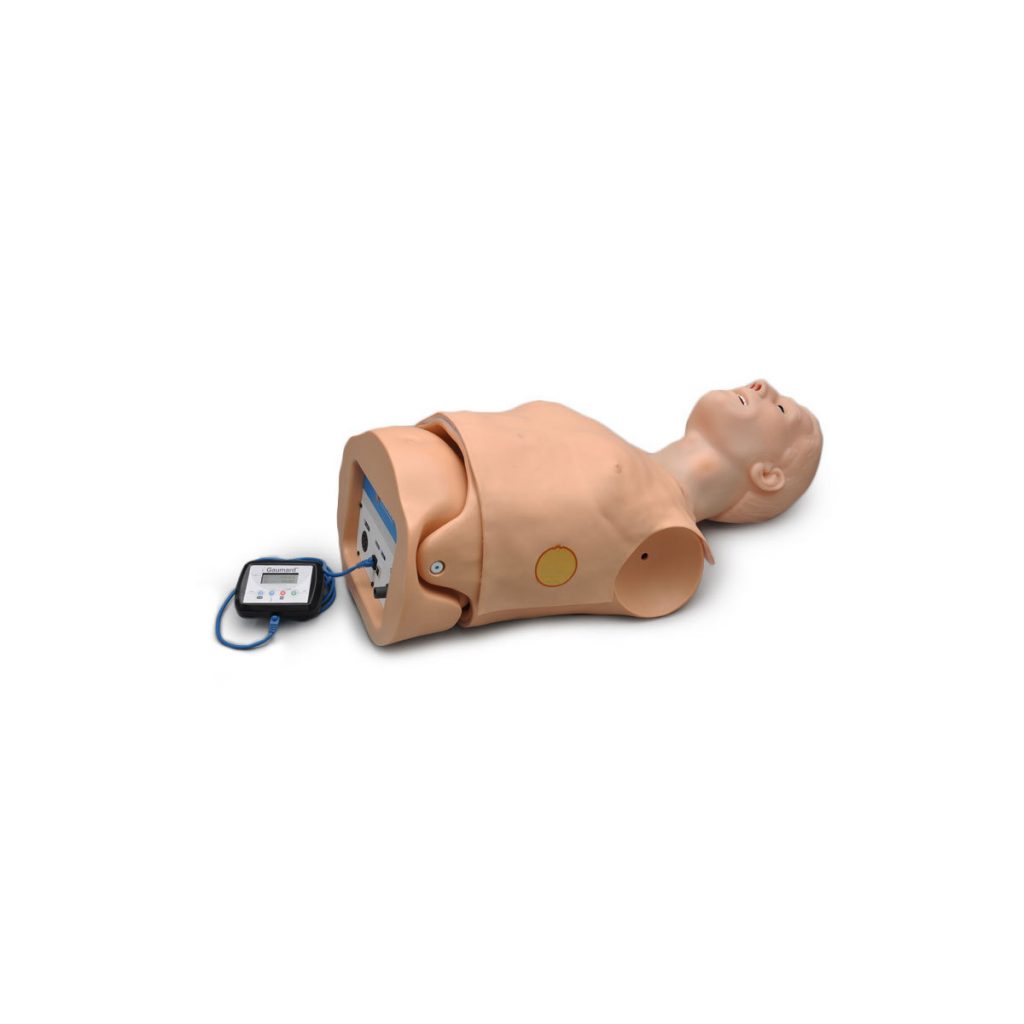
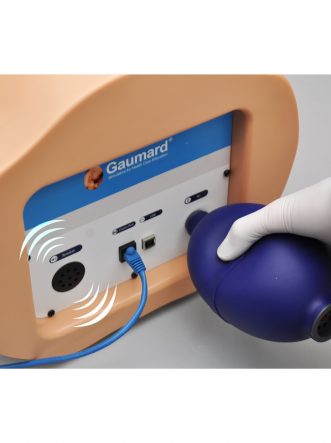
Stores the energy generated by chest compressions for power. Without the use of batteries or power cords, the trainer is capable of recording CPR quality and performance metrics, presenting realistic chest rise and palpable pulses after resuscitation, and more. Take your training to more places and reach more people with the convenience of truly tetherless technology.
Features :
- Intubatable airway with tongue, vocal cords, and trachea.
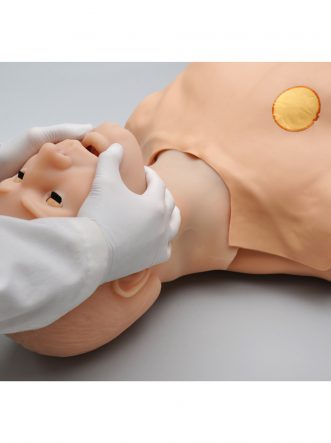
- Realistic head tilt/chin lift and jaw thrust
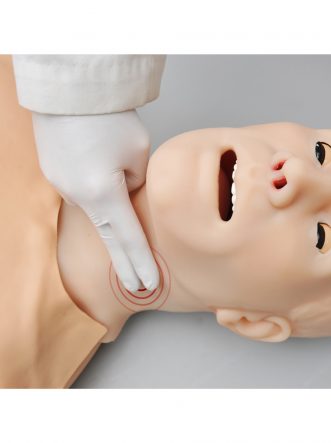
- Realistic chest cavity allows students to experience the correct force needed to perform proper chest compressions
- Anatomically correct landmarks for proper hand placement
- Proper chest compressions
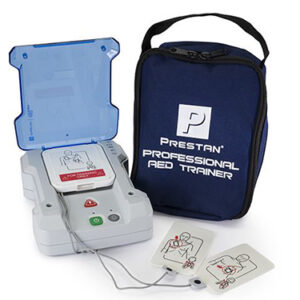
- Attach real AED pads directly to the conductive skin. Shock the conductive skin. Shock the simulator using your defibrillator just like a real patient. Your AED will display the simulator’s ECG.will display the simulator’s ECG.
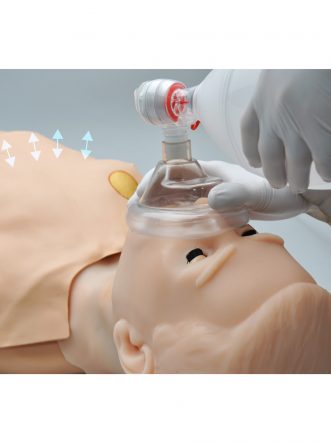
- Automatic pulses and breathing with realistic chest rise. Alternative Energy
- Electronics powered through chest compressions; 30 compressions get the system up and running. Simulator remains charged during training and recharges itself while the student practices CPR.
- No batteries to replace. Energy storage device capable of 500,000 cycles.
During Training for student:
- Coach mode: audible tones guide chest compressions Test mode: no guidance provided during test
For instructor
- Screen on handheld controller provides compression depth and ventilation volume in easy to interpret bar graph format
- Screen prompts instructor when student must compress “faster” or “slower”, “softer or harder”.
- Instructor can view real-time compression rate
Screen reports defibrillation energy After Training Instructor views student’s performance including:
- Average compression rate per minute
- Percent compressions in proper rate range
- Average compression depth
- Percent compressions in proper depth range
- Percent ventilations in proper ventilation volume range
- Actual compression/ventilation (C/V) ratio
- Exercise duration
- Idle time
- Reporting metrics stored in the controller’s flash memory and can be transferred to a computer using the controller’s USB port. Control Adjust/change feedback and reporting metrics:
- Proper C/V ratio • High and low compression rate limits
- High and low compression depth limits (in inches or centimeters)
- Proper ventilation volume
- Manual cardioversion upon defibrillation
- Program ECG rhythms; choose sinus, ventricular fibrillation, or asystole. Selected ECG rhythm will be seen on your real AED.
- Activate automatic carotid pulse and/or breathing Items included
- Full-size adult male head and upper body
- Handheld controller with 15 ft cable
- Carrying bag
- Operating guide
| HAL® Adult Airway and CPR Trainer | HAL® Adult Multipurpose Airway and CPR Trainer | HAL® Airway, CPR, and Auscultation Skills Trainer | HAL® Adult Multipurpose Airway and CPR Trainer | HAL® CPR+D Trainer with advanced feedback | |
| Item No. | 1019855 | 1019856 | 1022061 | 1022062 | 1018867 |
| Manually open or close eyes | Yes | Yes | Yes | Yes | Yes |
| Realistic head tilt/chin lift and jaw thrust | Yes | Yes | Yes | Yes | Yes |
| CPR hand positioning landmarks | Yes | Yes | Yes | Yes | Yes |
| Chest compressions generate palpable carotid pulses | manual | manual | manual | – | manual |
| Spontaneous breathing | – | – | – | – | Yes |
| Chest rise | Yes | Yes | Yes | Yes | Yes |
| Stomach rise | Yes | Yes | Yes | Yes | – |
| Nasal and oral intubation – ETT,LMA,King LT® | Yes | Yes | Yes | Yes | Yes |
| Right mainstem intubation presents unilateral chest rise | Yes | Yes | Yes | Yes | Yes |
| Tongue edema | – | – | – | Yes | – |
| Laryngospasm | – | Yes | – | Yes | – |
| Pharyngeal | – | – | – | Yes | – |
| Tracheostomy and cricothyrotomy | – | Yes | – | Yes | – |
| Bilateral chest tube sites at fifth intercostal space | – | – | – | Yes | – |
| Bilateral needle decompression site at second intercostal space with audible hiss | – | – | – | Yes | – |
| Programmable heart and lung sounds | – | – | Yes | – | – |
| Detectable EKG rhythm using real AED | – | – | – | – | Yes |
| Defibrillate and cardiovert using real energy | – | – | – | – | Yes |
| Carrying bag | included | included | included | included | included |
The HAL® CPR+D Trainer with Advanced Feedback (Item No. 1018867 / MPN: S315.500.M) by Gaumard Scientific, USA is the most advanced battery-free CPR and defibrillation training manikin in the HAL® series. Its breakthrough self-charging energy harvesting technology — powered entirely by chest compressions — makes it the ideal tetherless solution for high-volume BLS, ACLS, and emergency response training programmes that need to go anywhere, without compromise.
The World’s Only Self-Charging CPR+D Trainer
Unlike conventional training manikins that depend on batteries or power cables, the HAL® CPR+D Trainer stores energy generated directly from chest compressions. Just 30 compressions bring the system fully online. The energy storage device is rated for 500,000 cycles — eliminating battery costs and maintenance interruptions for the life of the product.
Q: How does the HAL® CPR+D Trainer power itself without batteries?
A: It uses a proprietary energy harvesting system that captures and stores kinetic energy from chest compressions. Just 30 compressions are enough to bring the entire system online, and it continues to recharge itself throughout the training session.
Q: Can I use my institution’s actual AED with this manikin?
A: Yes. The conductive skin accepts real AED electrode pads from any brand. Your AED will detect and display the simulator’s programmed ECG rhythm — sinus, ventricular fibrillation, or asystole — and deliver a simulated shock analysis exactly as it would on a real patient.
Q: Can real defibrillation energy be delivered to this manikin?
A: Yes. This is one of very few training manikins that supports defibrillation and cardioversion using actual energy from a real defibrillator — making it the closest possible simulation of a real cardiac arrest resuscitation scenario.
Q: What ECG rhythms can be programmed?
A: Instructors can select from sinus rhythm, ventricular fibrillation, and asystole. The selected rhythm is transmitted to and displayed on the connected real AED device.
Q: What airway techniques can be practised on this trainer?
A: The intubatable airway supports oral and nasal endotracheal intubation, LMA insertion, and King LT® insertion. Right mainstem intubation is confirmed by unilateral chest rise. Head tilt/chin lift and jaw thrust manoeuvres are anatomically realistic.
Q: How does the feedback system work during training?
A: The handheld controller displays real-time compression depth and ventilation volume as bar graphs, and prompts the instructor when the trainee needs to compress faster, slower, harder, or softer. Coach Mode provides audible compression guidance; Test Mode removes all guidance for assessment.
Q: What performance data is captured after a session?
A: The controller stores average compression rate, % compressions in correct rate range, average depth, % in correct depth range, % ventilations in correct volume range, actual C/V ratio, total exercise duration, and idle time — all transferable to a computer via USB.
Q: Is this suitable for NMC-compliant skills labs in India?
A: Yes. The HAL® CPR+D Trainer’s objective post-session performance reporting and real AED integration make it one of the most documentation-capable CPR+D trainers available, directly supporting competency-based assessment requirements for NMC-compliant BLS and ACLS skills stations.
Q: How long does the energy storage device last?
A: The energy storage component is rated for 500,000 cycles — effectively the operational life of the product — with no battery replacement ever required.
Reviews
There are no reviews yet.