

Description
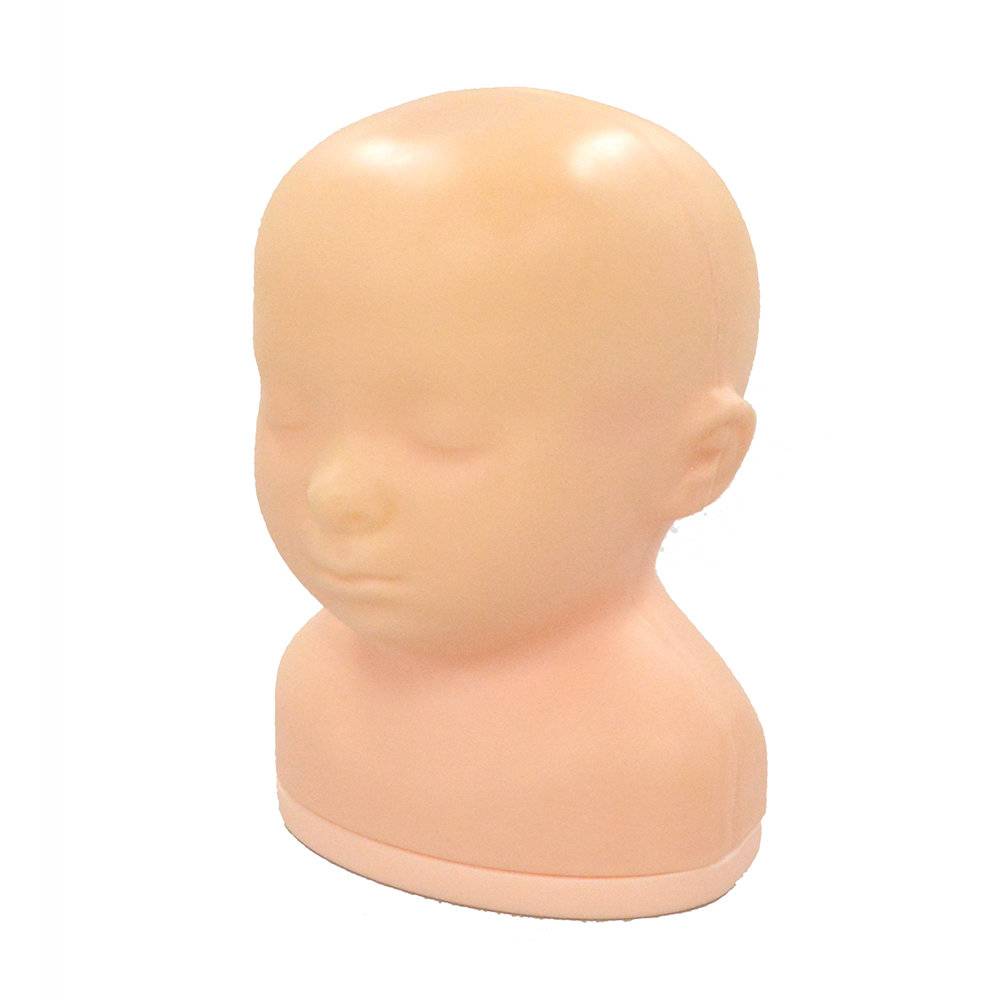
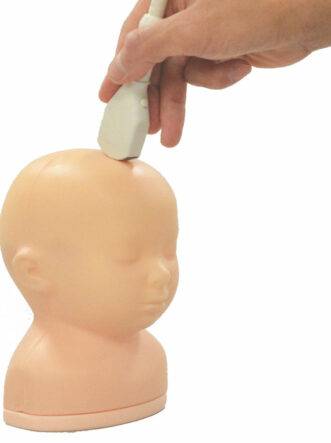
World’s first ultrasound neonatal head phantom with hydrocephalus
| Features | 1. Accurate depiction of a newborn’s cerebral anatomy 2. Realistic user experience with its life-like soft touch. |
|---|---|
| Training skills / Applications | Scanning of brain anatomy in sagittal (angled parasagittal), coronal and transverse planes via any fontanel / Palpation of anterior, posterior and mastoid fontanels |
| Set includes | 1 ultrasound phantom / 1 pillow / 1 storage case / 1 talcum powder/ 1 instruction manual |
| Size (approx.) | W13 x D14 x H20cm W5.1 x D5.5 x H7.9in |
| Packing size (approx.) | W35 x D25 x H19cm / W13.8 x D9.8 x H7.5in |
| Weight (approx.) | 1.5kg / 3.3lb |
| Packing weight (approx.) | 5kg / 11lbs |
| Materials | Polyurethane elastomer, Latex free |
| Related products | US-14a_Ultrasound Neonatal Head Phantom (Normal type) US-13_Infant Hip Sonography Training Phantom Newborn Whole Body Phantom “PBU-80” |
| Production & Development Supervision | Charlotte Henningsen ,MS,RT(R),RDMSRVT,FSDMS,FAIUM Chair & Professor – Sonography Department Adventist University of Health Sciences |
| ANATOMY | skull, anterior fontanel, posterior fontanel, hypertrophied lateral ventricle |
| Update | August 9, 2020 |
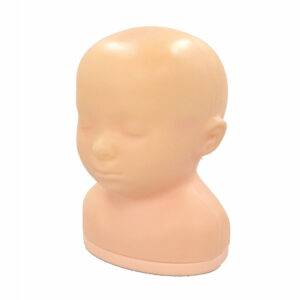
The Ultrasound Neonatal Head Phantom, Abnormal type (Item No. US-14b, 1.5 kg) by Kyoto Kagaku, Japan is billed as the world’s first ultrasound neonatal head phantom with hydrocephalus — giving students a realistic pathological counterpart to normal newborn cranial anatomy for cranial ultrasound training.
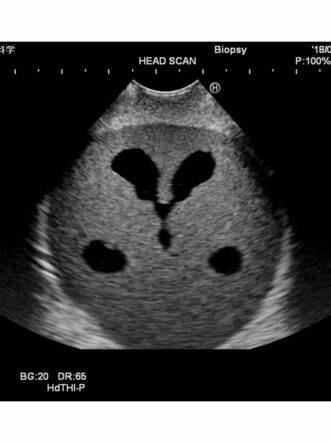
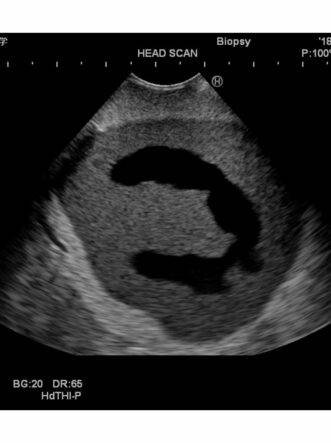
Accurate cerebral anatomy with a lifelike feel. The phantom accurately depicts a newborn’s cerebral anatomy, including the skull, anterior and posterior fontanels, and a hypertrophied lateral ventricle — the key finding used to identify hydrocephalus on cranial ultrasound. Its soft, life-like touch closely mirrors what a sonographer would feel palpating a real neonatal skull.
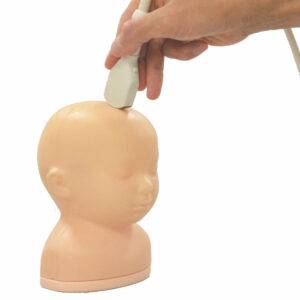
Trains the full cranial ultrasound workflow. Students practice scanning brain anatomy in sagittal (angled parasagittal), coronal, and transverse planes through any of the fontanels, as well as palpation of the anterior, posterior, and mastoid fontanels — the physical exam step that guides correct probe placement before scanning even begins.
Why this pairs well with the normal-type phantom: cranial ultrasound training benefits from direct comparison between normal and abnormal findings. Institutions running comprehensive neonatal sonography training should consider this alongside the Ultrasound Neonatal Head Phantom (Normal type), so students learn to recognize hydrocephalus against a known healthy baseline.
What’s included: 1 ultrasound phantom, 1 pillow, storage case, talcum powder, instruction manual.
Developed under supervision of Charlotte Henningsen, Chair & Professor of the Sonography Department at Adventist University of Health Sciences.
Why Buy from SEM Trainers? SEM Trainers & Systems is an authorised distributor of Kyoto Kagaku products in India with over 30 years of experience supplying medical simulators and clinical skills trainers to 1,500+ institutions across 28 states. We provide pan-India delivery and dedicated after-sales support.
Frequently Asked Questions
Q: What pathology does this phantom simulate?
A: Hydrocephalus, represented by a hypertrophied lateral ventricle — the phantom is described by the manufacturer as the world’s first ultrasound neonatal head phantom to include this pathology.
Q: Which fontanels can be used for scanning?
A: All three — anterior, posterior, and mastoid fontanels support palpation and scanning access.
Q: Should we buy this alongside the normal-type phantom?
A: Many institutions do, to give students direct normal-vs-abnormal comparison during training. Contact our team if you’d like both as a set.
Contact us at [email protected] or call +91-88495 63724 for pricing and availability.

Reviews
There are no reviews yet.