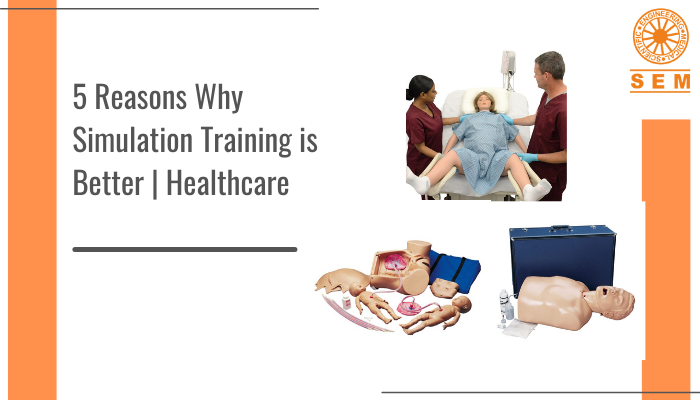
5 Reasons Why Simulation Training is Better | Healthcare

The benefits of incorporating simulation training in teaching specific medical skills are manifold. But what are the 5 biggest advantages that make it a viable option that delivers superior results to using the traditional teaching paradigm alone? Let’s find out.

What is Simulation Training?

Simulation training is the process of reproducing realistic environments and situations (often with the use of lifelike simulators/manikins and trainers/medical skills) to create a hands-on learning experience for a learner to practice certain skills. Simulation has been adopted into various fields as a method of learning. For example, pilots first learn to fly a plane on a simulator. Today, it is an essential teaching tool in various industries like aviation, military, and healthcare.

5 Things that Make it Better than Traditional Learning

There are many more benefits to simulation learning other than the fact that it provides the opportunity for hands-on learning. Here are 5 reasons why it is effective (and better):

It provides a safe environment and avoids risk to real patients

While simulation provides an excellent hands-on learning opportunity (theoretical learning isn’t enough for some skills), it does so in a safe environment. This means that students can explore. That they are free to make mistakes and are given the chance to learn from their mistakes rather than being reprimanded for them or the mistakes translating into real-life blunders. This is a rather important attribute of the learning process- the privilege to be able to make mistakes and learn from them. And when students feel free to explore, they inarguably learn better. On top of that, it means that real patients will not be put at risk, as it is when learners practice on real patients- one mistake and a lot could go wrong. Plus, not everyone is comfortable with being attended by a fresher-simulation also helps avoid that.

It builds team skills (among many others)

Usually, in the real-life clinical setting, professionals don’t work alone. A whole team of individuals and a whole lot of work goes into saving lives. Individuals must work together to make the best decisions possible in time to save a patient’s life and deliver optimal treatment quality. Apart from building skills like decision-making skills and the ability to think on your feet, simulation in healthcare training helps build communication and collaboration skills and the ability to work in a team. It also helps with team leading, team building, and crisis resource management skills. People don’t just start working together if placed in the same room; the ability to work efficiently as part of a team is important.

It builds confidence AND improves the quality of patient care delivered

By bridging the gap between theory and practice, simulation training is able to instill a kind of confidence in learners that enables them to go ahead and deliver excellent quality care as they step into the profession. And confidence is also directly linked to competence. A confident professional will be able to smartly deal with any situation- like when interacting with patients or their families, or when there is a tough decision to make. So when learners start to develop confidence, it becomes easier for them to start taking their own decisions and operating by their own autonomy.

It provides real-time feedback

Not only does simulation training and medical skills bridge the gap between theory and practice, through the use of lifelike simulators and trainers with monitors that display real-time feedback, it is made easier to assess the student’s performance. But this isn’t useful for the instructor alone. It means that the student can evaluate his own performance as he works on the patient (manikin or trainer) and evolve to make better decisions during the process. This is a benefit that is not present with the traditional training method. It is one of the things that makes simulation training so effective in healthcare.

It gives learners an idea of what to expect

While a simulated environment is exciting and comfortable, it also prepares learners for what to expect in a real clinical setting. With high-fidelity simulation, there are some distractions as would be in a real hospital. There may be too much noise, a bad smell, or a number of other big and small disturbances that can easily distract someone working on a critical task and result in serious procedural errors. It can also worsen performance and increase the number of attempts and the amount of time taken to do something. Being exposed to such distractions at an early learning stage can accustom the learner to think on their feet and perform better despite said distractions, effectively preventing serious errors.

With such obvious benefits, simulation training greatly outweighs the performance benefits offered by traditional learning alone, and is an indispensable asset in healthcare education.

Follow us on Social Media :

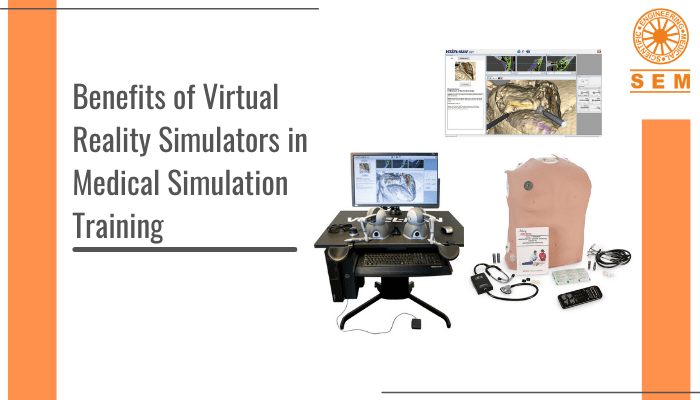
Benefits of Virtual Reality Simulators in Medical Simulation Training

If the pandemic has taught us anything, it is that no matter what life throws at us, we can keep going. While everyone switched to online learning, it was not possible to learn practical medical and surgical skills on a video call. So, we adopted Virtual Reality into simulation training for learning medical and surgical skills so students can still learn practical skills. But Virtual Reality simulators is much more.

What is Virtual Reality and How Does it Apply to Medical Training?

Simulation can be classified into physical, virtual reality, and hybrid. It has already proved to be a widely accepted success in training. It gives students the opportunity to practice procedures wherever they want, whenever they want to. Learners can practice repeatedly in a safe environment, with real-time feedback, and without the risk of causing harm to real patients. But what happens if we introduce virtual reality to simulation training? Let’s first understand what virtual reality is.

Virtual Reality is a computer-generated simulated, 3D environment that you can realistically interact with using special electronic equipment (like a headset with a screen inside or gloves with sensors). There are sensory stimuli present, and how you interact with it partially determines what will happen next. For example, if you wear VR glasses and play a certain game using that, you will feel like you are in the game. In fact, it can be so surreal that many get scared while playing a game with zombies or riding a roller coaster virtually. Through the use of various senses, it creates an immersive experience for you by putting you in scenarios where you are the actor and what you do determines what happens next in the environment.

Using this concept, diverse realistic scenarios can be created for training students in medical and surgical skills. In these scenarios, they enter 360° simulated environments where they experience various sights and sounds that help create a virtual reality.

Today, VR simulators are more realistic and affordable. And research has repeatedly proven the benefits of using VR in simulation training. Without enough hands-on training, students struggle with the development of some cognitive, technical, and socio-emotional skills. This was a problem even before the pandemic- it is hard to provide enough learning opportunities for the students to develop practical skills. VR has helped immensely with this as it allows repeated practice and helps create experiences that might not be so easily accessible(and which may be stressful or rare), and does it without risks or pressure, and without time or space limitations.

Simulating Real Life with Virtual Reality Training

Using virtual reality to train learners on technical skills lets them feel the stress of a real-life scenario without the risks of the real one. And it helps them develop the skills through repeated hands-on practice. Not only are the scenarios realistic, some of them portray some of the not-so-common clinical scenarios where learners are bound to make mistakes. This helps them deal with such situations when they happen in real life.

Simulating a Multiplayer Scenario

Using virtual reality, we can prepare a multiplayer scenario, allowing learners to collaborate and work a case as a team. It lets them interact with each other the way they would do if it was real life. They can identify who gathered which kind of data (like vital signs, physical exam results, case history, and point-of-care testing), and can identify gaps in that data and fill in the blanks. They can delegate responsibilities. Virtual reality training also allows room for interprofessional simulation like by allowing learners from nursing and case management to communicate and collaborate.

Benefits of Virtual Reality Training

There’s a whole myriad of benefits offered by using VR simulation for training:

  • Realistic learning environments that can be reproduced
  • Repeated hands-on training
  • Diverse scenarios (even those that can’t be created otherwise)
  • Gamification of learning
  • Performance feedback
  • Continuous peer interaction

And this leads to:

  • Better student motivation and presence
  • Active learning
  • Improved decision-making abilities
  • Improved critical thinking abilities
  • Better communication skills
  • Helps them identify their strengths and weaknesses
  • Overall, it leads to better learning and dexterity in the technical skills

Also, virtual reality simulators usually come with an in-built objective evaluation system to track and provide feedback about a learner’s performance after each procedure. This gives various parameters like the time, bleeding, bleeding volume, injuries caused, and a pass or fail remark.

It is evident that incorporating virtual reality into simulation training is capable of delivering better results than using traditional training methods. Virtual reality simulators offer a range of benefits from providing learners with a platform where they can engage in repeated hands-on training to creating scenarios that would not be possible otherwise.

Read More Blogs:

How Simulation-based Learning is Revolutionizing Nursing Education

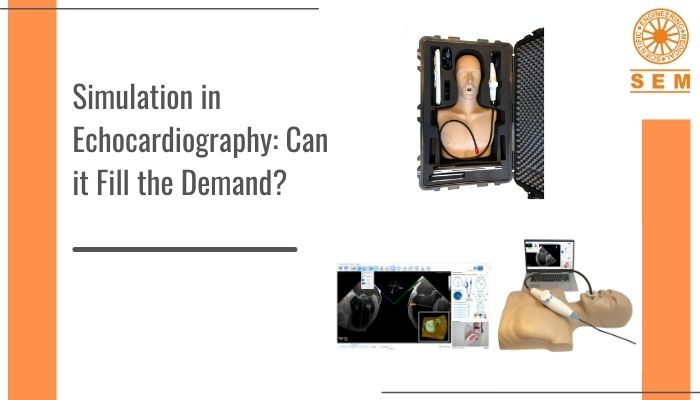
Simulation in Echocardiography: Can it Fill the Demand?

Echocardiography, which is the use of ultrasound waves to observe the action of the heart, is known to be notoriously difficult to learn and requires extensive training to master. Can simulation in echocardiography be the answer to the growing demand?

Echocardiography needs a lot of skill to master

Today, cardiovascular diseases are one of the most common causes of death around the globe. And as they become more prevalent, the demand for diagnosis also increases. Since echocardiography is an affordable, non-invasive imaging technique that delivers immediate results, it is of importance to see how we can improve the learning process for aspiring learners. But it is difficult to learn.

Apart from being technically competent and practically skilled in what they do, echocardiographers need to understand:

  • The physics behind the modalities
  • Sufficient knowledge of the anatomy
  • The physiology and pathology of the heart

It is hard enough to handle the transducer and connect it to the heart’s anatomy, but they need to understand the basics of ultrasound physics and extract and assess information of the 3D heart from a 2D image.

Challenges to Learning Echocardiography

A 2019 study by Dieden, Carlson, and Gudmundsson discovered the main challenges to learning echocardiography, and the things that could aid the learning. Students found the main challenges to be:

  • The projections: It can be a sizeable task to steer the transducer and obtain a projection, and then make sense of it. And it can be hard for the students to link the projections to where in the heart the ultrasound beam cut.
  • Handling the probe: It can be hard for learners to figure out where to place, angle, and turn the transducer for some projections. They can be clueless about how to position and turn the transducer if they never have any practice.
  • Connecting ultrasound physics and measurements to practical application: Students can find it difficult to link the theory of ultrasound physics to practical performance with the machine.

Things That Help Students Learn Better

The study mentioned above also stated 5 things that would improve learning:

  • Immediate feedback: Real-time feedback and correction from instructors and the screens on the task trainers can improve the learning process; like if the screen can tell them whether they have placed the transducer correctly
  • Playing with the ultrasound machine: it allows learners to use the machine firsthand where no button is off-limits and nothing can go wrong
  • Video lectures
  • The possibility to swiftly alternate between practice and theory: while getting hands-on experience with the ultrasound machine helps learners practice what they just learned, it also helps them understand when and how to apply some concepts and measurements in the clinical setting
  • Learning by their mistakes in a risk-free environment without serious consequences: Students learn to accept that making mistakes is a positive part of the learning process and can make them better at the task

It is interesting to see that 4 out of the 5 things mentioned above can be achieved with the help of manikins and simulators. Using a manikin helps students learn echocardiography in a way that lets them truly understand the fundamentals behind what they are learning, and can even help learners link the anatomy of the heart, placing the probe, and the location of the beam. Echocardiographic simulation can aid traditional training strategies and improve their efficiency.

It can be hard to get real heart patients for learners to operate on. Additionally, if they do learn by operating on real patients, it can make the patients uncomfortable, put them at risk, and breach their privacy. And it can be hard for teachers to explain concepts to learners while managing the needs of a live patient.

It is well-known how simulators allow repeated practice of diverse scenarios ranging from high-risk to rare, and have been adopted into medical and surgical training. Numerous studies have proved that using simulations and mannequins for learning echocardiography is largely beneficial.

By incorporating simulation in echocardiography, learners profit by shorter learning times(by accelerating the learning process), better outcomes, and lower complication rates. They learn to manipulate the transducer better and angulate it to the skin safely, and comprehend the projections easily. Finally, incorporating simulation in echocardiography helps produce competency.

Read more blog :

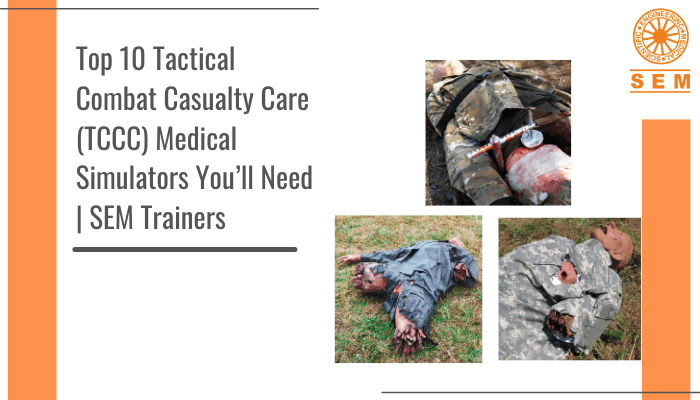
Top 10 Tactical Combat Casualty Care (TCCC) Medical Simulators You’ll Need | SEM Trainers

Top 10 Tactical Combat Casualty Care (TCCC) Medical Simulators You’ll Need | SEM Trainers

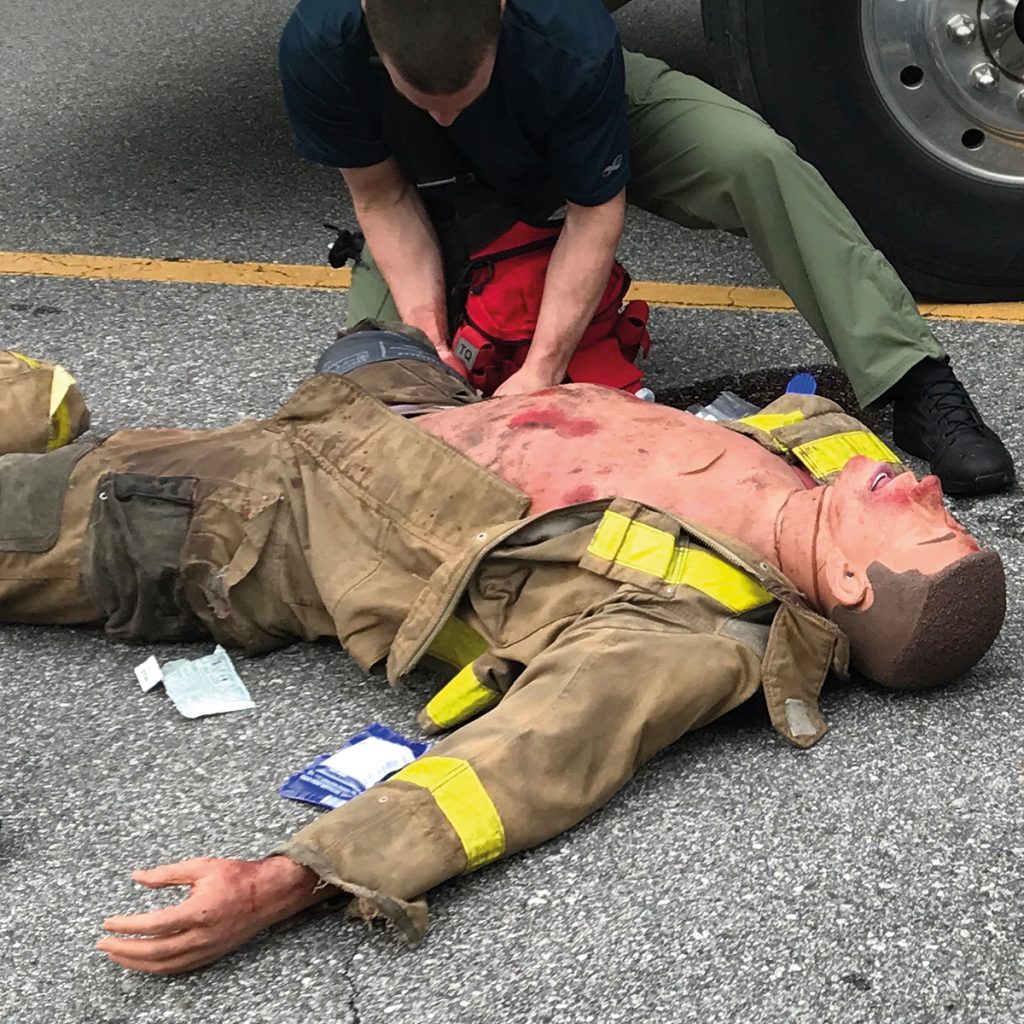
Tactical Combat Casualty Care (TCCC) are guidelines for providing immediate medical care for life-threatening injuries on the battlefield. Training for TCCC skills can be provided in 3 phases (care under fire, tactical field care, and tactical evaluation care). Students learn the management of trauma care and blast related injuries, and handle hemorrhage control and airway management. Learners cannot be assigned to real patients for handling traumatic combat injuries, but with the help of hyper-realistic simulators, they get all the practice they might need!

Here are some of our powerful TCCC simulators:

  1. Casualty Care Rescue Randy – powered by Strategic Operations Hyper-Realistic® technology

The three most preventable causes of death are massive bleeding, airway obstruction, and tension pneumothorax. This one is a hyper-realistic full-body manikin that is perfect for training on the procedures that treat these 3 conditions. This manikin holds 3-4 liters of blood and simulates a 2-3 psi blood pressure.

  1. Tactical Combat Casualty Care Simulator with Major Vascular Injuries – TCCS 2

This full-body simulator is great for realistically training combat trauma care for major vascular injuries for hemorrhage management and airway control using common wound patterns of combat. Durable in the toughest training scenarios, this simulator is water resistant and great for indoor and outdoor training for the military, government forces, medical rescue, and private security. It is remote-controlled and simple to operate, and comes with an instructor interface tablet with simulation logs and self-diagnosis. Use it for high threat extraction training and realistic TCCC field training scenarios.

  1. Tactical Combat Casualty Care Simulator with Traumatic Amputations – TCCS 3

A full-body TCCC simulator for training combat trauma care for traumatic amputation injuries that are above the left elbow and above the left knee along with an amputation at the upper right thigh above the tourniquet line. Highly durable in the toughest training scenarios and water resistant, this simulator is great for indoor and outdoor training. With its lifelike tissue, it is great for training of hemorrhage management and airway control, high threat extraction training, and realistic TCCC field training scenarios.

  1. Tactical Combat Casualty Care Simulator with Traumatic Amputations and Gunshot Wounds – TCCS 4

This full-body simulator is great for training for multiple traumatic gunshot wounds (like sucking chest wounds) and amputation injuries above the left elbow and the left knee. Like the others, this is highly durable and water resistant, and great for training of hemorrhage management, airway control, high threat extraction training, and realistic TCCC field training scenarios.

  1. Tactical Combat Casualty Care Simulator with Abdominal Evisceration – TCCS 5

A full-body simulator good for training combat trauma care for abdominal wounds with evisceration and a traumatic amputation above the right wrist. Highly durable and water resistant, and great for external hemorrhage and airway control, high threat extraction training, and realistic TCCC field training scenarios.

  1. Tactical Combat Casualty Care Simulator with Gunshot Wounds – TCCS 1

Another full-body TCCC simulator for combat trauma care training of gunshot wound management, hemorrhage management, airway management, and trauma management related to the casualty’s breathing and circulation. Highly durable and water resistant, and great for hemorrhage management, airway control, high threat extraction training, and realistic TCCC field training scenarios.

  1. Tactical Hemorrhage Control Trainer – THCT

This one is a full-sized, remotely-activated simulator for point-of-injury, tactical medicine training for law enforcement and first responders. With realistic and anatomically-accurate soft tissue, durability, and water resistance, this simulator has remotely-activated pulsatile bleeding, multiple injuries like gunshot wounds, stab wounds, and crushing injuries, and an amputation on the left leg above the knee for tourniquet application.

  1. CPR Module for REALITi360 Patient Monitor Simulators

This one is a CPR module with detailed real-time visual feedback on CPR quality. A sensor keeps track of the rate, depth, and release of each compression, and the system evaluates CPR time, correct chest compressions, pressure depth status bar, pressure posture, and pressure CPR rhythm. The system can be worn on the wrist, deployed on a manikin, or even placed inside a manikin.

  1. Hemorrhage Control Arm Trainer P102

A trainer for hemorrhage control on the upper extremity with realistic wound and bleeding simulation. Affordable and great for training of bleeding control and management of traumatic arm injuries. It has a deep laceration/stab wound, a large caliber gunshot wound, and a junctional wound in the shoulder.

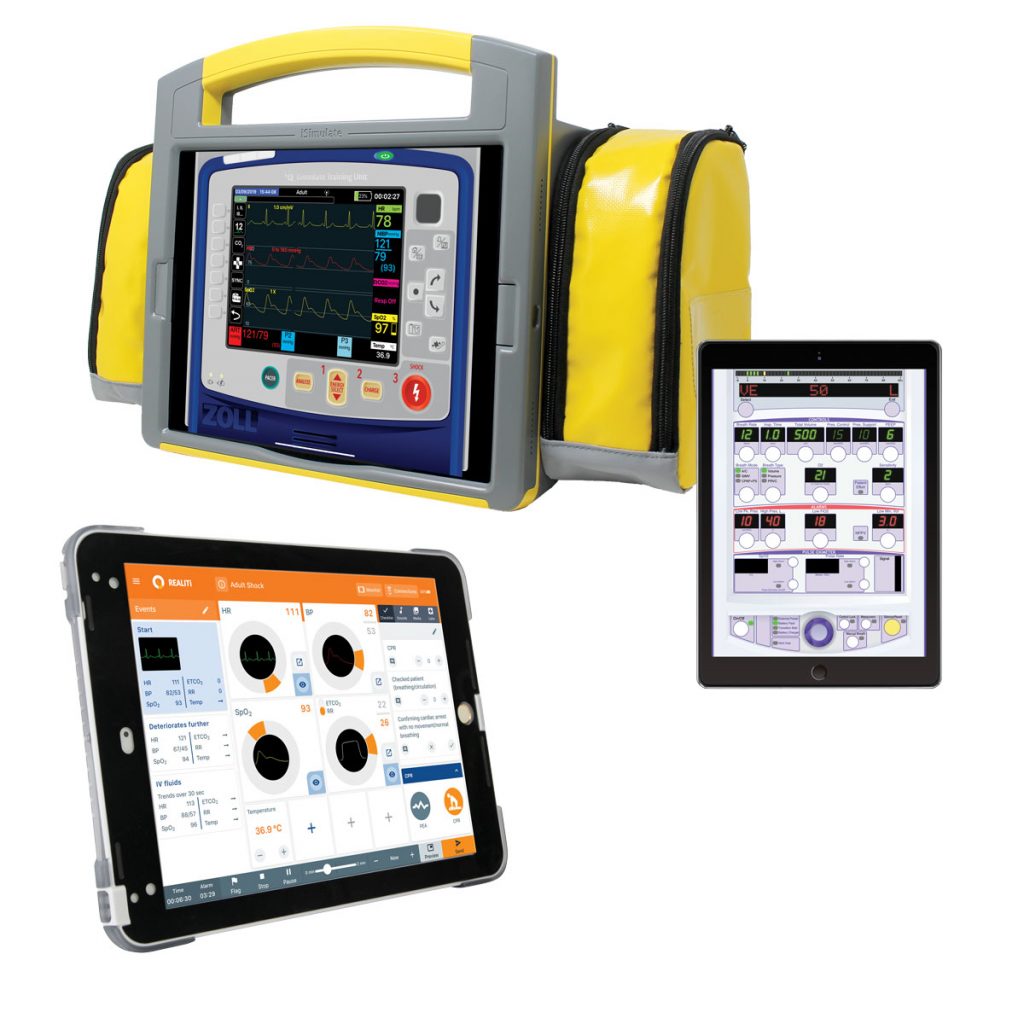
  1. Simulated Patient Monitor – REALITi Plus

A patient monitor that is a smart, integrated, and modular simulation ecosystem and lets medical educators run multiple scenarios – from basic to sophisticated. It is mobile, so you can conduct training anywhere- whether it’s an ambulance, a helicopter, a hospital, or a skills lab. 

For meticulous tactical combat casualty care training with the help of simulators, call us at 02632 257259 or drop us a mail at [email protected] today!

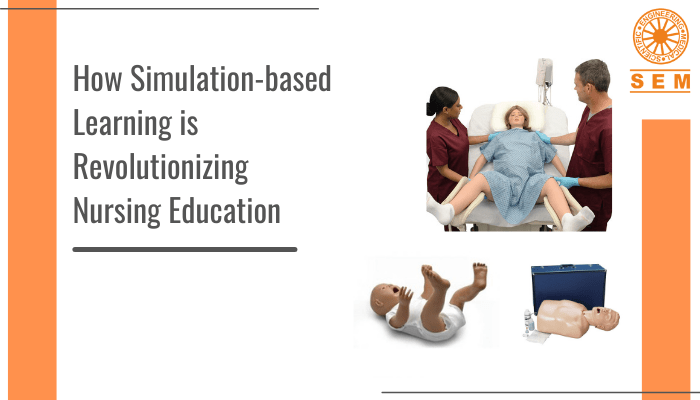
How Simulation-based Learning is Revolutionizing Nursing Education

Nurses are the heart of healthcare. With that in mind, it is intriguing to discuss the benefits of a simulation-led approach to nursing education.

Through the inclusion of role-playing, devices, trained persons, trainers, environments, and lifelike manikins, promoting learning and eliminating risk for the trained and the novice alike, simulation-led learning creates the perfect opportunity for learners to acquire necessary nursing skills in a safe environment. This also offers the added advantage of building critical decision-making skills by simulating various real-life scenarios. Affected slightly by the level of fidelity, simulation-based learning for nursing education can have a range of benefits.

  1. Hands-on Learning

While it is detailed and complete, theoretical learning can quickly become boring for a group of learners eager to become skilled professionals. Simulation-based learning solves this problem. Not only does it provide learners a way to learn specific skills by actually practicing them, it lets them do so in a safe environment.

  1. Immediate Feedback

A multitude of simulators is designed to provide real-time feedback for the learner’s performance (often through a screen or through lifelike response to stimuli). This feedback can then be used to further improve a learner’s prowess in specific skills. And it all happens in a safe environment, successfully avoiding the risk of causing harm or inconvenience to real patients. Additionally, people learn better when they aren’t afraid of making mistakes.

  1. Learning through Repetitive Practice

Practice makes perfect. Besides, with something as important as nursing, repeated practice builds skill, instills confidence, clarifies the fundamentals, and prepares the learner for stepping into a real clinical setting.

  1. Building of Important Skills

    Simulation allows learners the opportunity to practice caring for patients in ways that they cannot in the real-life hospital setting. Through several studies, it has been found that simulation-based learning for nursing education has a positive impact on knowledge acquisition, psychomotor skills, self-efficacy, satisfaction, confidence, critical thinking skills, and communication skills. It does all that within a safety net.

From mass casualty and wound care to mental health and end-of-life care, nursing skills education benefits from the adoption of a simulation-based approach to learning.

Benefits of a Simulation-Based Approach to Nursing Education

Teaching nursing skills through simulation involves a lot of role-playing and playing out realistic scenarios using actors and manikins. A student can pretend to be a patient, a nurse, a healthcare assistant, a manager, a student, a doctor, or even an angry relative. Imagine that as a student, you are pretending to be a nurse tending to three patients and receiving a call from the relatives of one of them. Think about what skills you would take home from that experience. No matter what scenario plays out, the result is improved patient care skills for everyone involved in the scenario. Simulation-based training is effective at bringing on the following changes in learners:

  • The ability to think on their feet
  • Refined communication and management skills
  • Acute decision-making skills
  • Confidence in their nursing abilities
  • The ability to work under pressure
  • Improved knowledge of nursing skills
  • Visibly improved technical skills
  • Stronger leadership skills
  • Developed self-confidence and attitude/aptitude for nursing
  • Students are exposed to rare clinical situations
  • Students are able to practice clinical reasoning skills

Other Miscellaneous Benefits

Other than the obvious benefits to the learning process and the learner, there are some other benefits to the nursing education system as a whole:

  • Enhanced patient safety and quality
  • Learners can manage patients without posing risk to actual humans
  • Controlled and safe learning environment
  • Structured feedback
  • Faster time to competence
  • Fills the gap in faculty/clinical site resources

Additionally, simulation-based nursing-skills training avoids inefficiency due to the following during training:

  • Feeling awkward for getting in the way of nurses’ work
  • Getting flustered by an unexpected situation or care instruction
  • Experiencing difficulty in adapting to training because many parts were not covered in school

It can safely be said that a simulation-based approach to nursing skills training lays the foundation for a student-centred learning paradigm. So owing to the array of benefits that it brings with itself, simulation-led training has secured its place in nursing skills training as an indispensable asset. And with further advancements in the technology, it may open up newer horizons of learning in nursing and other aspects of healthcare.

Simulators from SEM Trainers

If you’re looking to purchase medical simulators for the purpose of nursing skills training, your search ends here, because SEM Trainers is the #1 provider of premium-quality simulation products sourced from Germany, USA, Japan, and Europe.

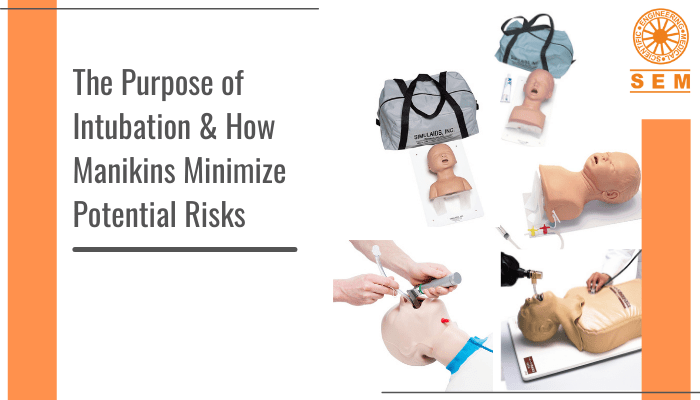
The Purpose of Intubation & How Manikins Minimize Potential Risks

We live in a world where immediate, urgent care is at our fingertips. It is now easier to save lives. This couldn’t have been done without the use of medical manikins in training medical aspirants. The benefits of simulation training are manifold. Today, we will discuss the purpose of intubation and the role of medical manikins in reducing the risks associated with it.

What is Endotracheal Intubation?

If you have been the unfortunate victim of a brutal accident and cannot breathe, one of the first things the paramedic or healthcare professional will do is intubation. The ultimate purpose of this procedure is to save lives when people can’t breathe. In this procedure, the paramedic will guide an endotracheal tube (ETT) into your mouth/nose, voicebox, and then the trachea(the windpipe) after locating your vocal cords through a laryngoscope, which is a small instrument with a light. Since you won’t be able to breathe naturally, this tube will hold the airway open so that air can get to your lungs. Essentially, intubation is used to help a person breathe when he can’t breathe on his own regardless of whether it’s the result of an injury. It is usually performed in the hospital, during an emergency, or before surgery.

Risks Associated with Intubation (and the role of manikins)

Keeping in mind that it is an emergency procedure, and that an entire tube is guided through to the trachea, there are some risks involved:

  • The person’s teeth may be injured due to the forces applied to the maxillary incisors during the process
  • There may be an injury to the throat or the trachea
  • Too much fluid may build up in organs or tissues
  • There may be bleeding
  • Occasionally, it can cause a lung complication or injury
  • Acids and other contents from the stomach may end up in the lungs (this is called aspiration). The person may inhale vomit, blood, or other fluids
  • A person may develop an infection, like a sinus infection
  • Endobronchial intubation: The tube may further go down one of the two bronchi
  • Esophageal intubation: The tube may go down your esophagus (the food pipe) instead of the trachea
  • Finally, the intubation might not even work

As a beginner proceeds to perform this on a manikin, he is more relaxed and focussed, and less afraid of the consequences of a mistake. These days, we have manikins with incredibly lifelike anatomical landmarks that respond to the process and also give real-time feedback for incorrect intubation. For this procedure, at least, learners cannot be given the opportunity to practice by operating on real patients, given the number and intensity of risks involved.

If you want to purchase professional-quality intubation manikins for your training programs, look no further. At SEM Trainers, we deliver state-of-the-art manikins to help you with your training needs:

Intubation Head for CPR

This head packed with lifelike anatomical details helps practice a full range of airway management techniques. It helps in double nasotracheal intubation, bag and mask ventilation techniques, supraglottic devices, direct laryngoscopy, endotracheal tube insertion, awake fiber optic examination, and combi tube insertion.

Nasogastric Intubation Model

This one comes with a median section through the nose, mouth, pharynx, trachea, esophagus, and stomach, giving your learners a better idea of what’s happening. It also includes a tracheostoma to show endotracheal aspiration.

Child Intubation Head

Manikin of a 3-year-old for training nasal and oral intubation skills. This one comes with inflatable lungs and stomach, and anatomical landmarks.

Endotracheal Intubation Simulator

Endotracheal intubation is an extremely skilled procedure and carries the most risks. That is why you should first train your learners on this simulator before going on to real patients. It helps practice oral and nasal tracheal intubation, use of the laryngoscope, securing airways, handling supraglottic airway devices, and determining ventilation and accidental oesophageal intubation among others.

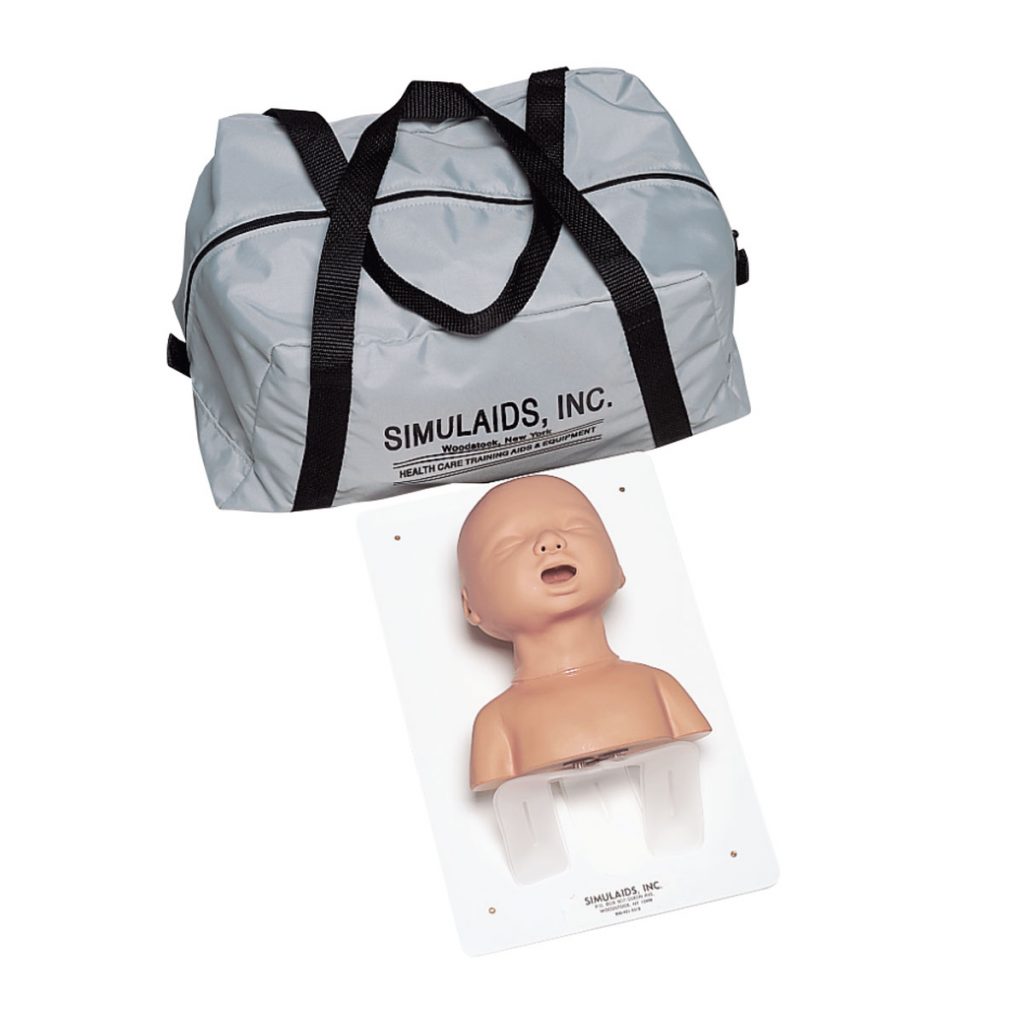
Infant Intubation Head

An infant manikin for the practice of nasal and oral intubation skills on an infant. Like the child intubation head, this comes with inflatable lungs and stomach, and anatomical landmarks.

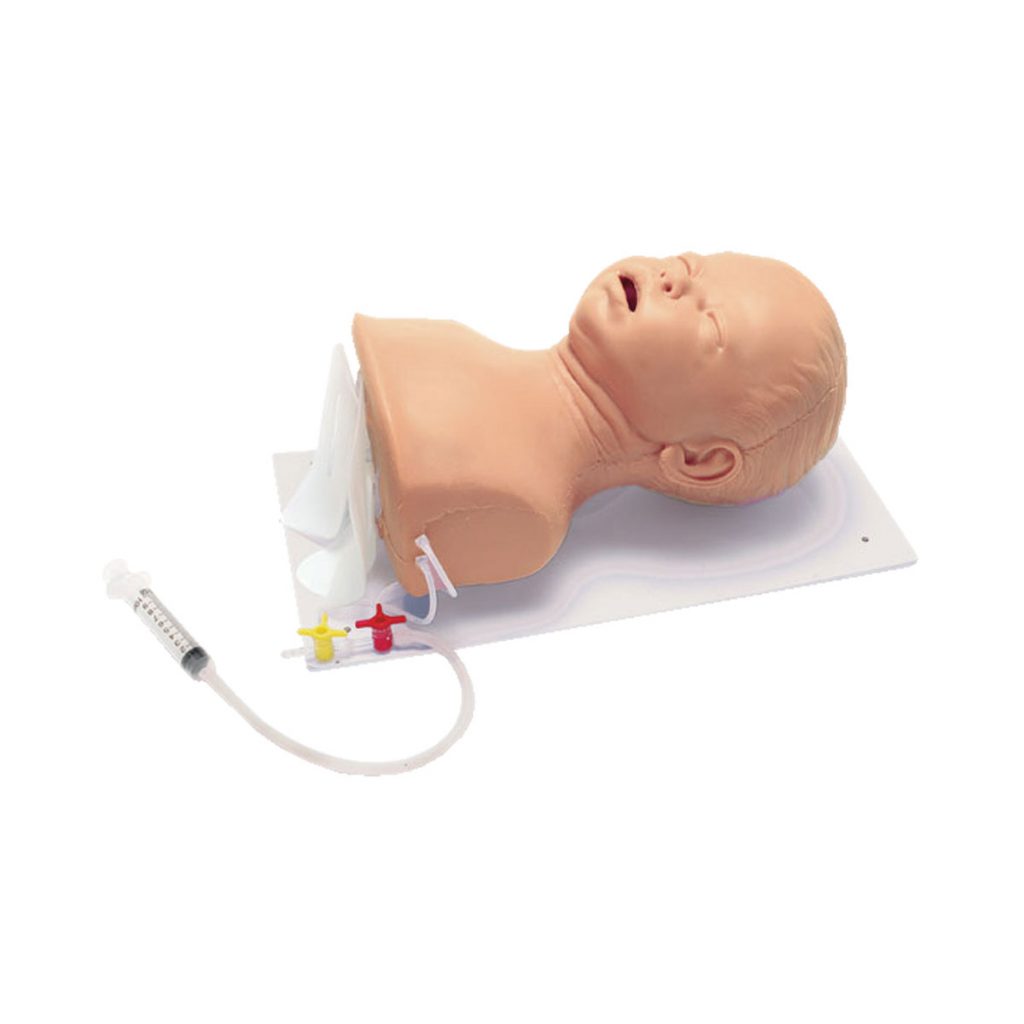
Advanced Infant Intubation Head with Board

With its new skin technology, exceptional durability, and lifelike appearance (and a lightweight stand), this makes for an excellent manikin for pediatric airway training. What’s advanced about this one, you ask? Well, with the new material, the airway won’t tear up, and you won’t have to take it for costly repairs every time a student makes a mistake. And because this new skin is translucent, you will be able to see the airway and neck illuminate.

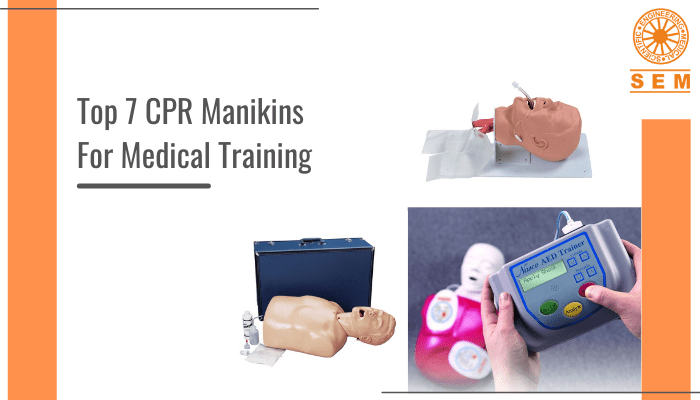
CPR Essentials: You can’t Talk Medical Training Without These 7 CPR Manikins!

Simulation training has changed the way we approach medical training. It has made great strides in training students on Cardiopulmonary Resuscitation (CPR) skills as well. (A rather convenient option to employing the techniques on real actors.) And with something as urgent as CPR, using realistic manikins can mimic performing CPR on a real person. And students learn better when they can believe the scenario and accept it to be happening.

When we use realistic manikins for CPR training, they help students gain vital skills. These manikins often react realistically to certain stimuli. For instance, just by tilting the head or the chin, we can manipulate the airway and simulate choking or obstruction.

As a First-Aid and CPR instructor, CPR manikins will be your biggest investment in medical training. And for the training to be effective, it is important to use high-quality manikins that employ the best trade-off between fidelity and cost. Essentially, these are medical training equipment used to teach advanced medical procedures and CPR. Finding the right manikins for your training program is important and can depend on your needs. But no matter what you are going for, the following 7 manikins are the must-have of any CPR training program, as they are extremely realistic, responsive high-quality manikins that increase efficiency and encourage learning.

BASICBilly+ incl. Upgrade KIT (Adult CPR Torso With Feedback APP)

The BASIC Billy+ BLS and CPR is a pocket-friendly AHA-compliant BLS manikin that works on Bluetooth to let you train, monitor, analyze, and debrief CPR performances while students can learn the correct hand positions for chest compression, pratice resuscitation, and see their own performance in real-time. Through correct cardiac massage and ventilation technique with direct feedback, this manikin is the perfect example of how you can save lives through CPR if done correctly. This one has realistic anatomical landmarks and head-tilt functionality.

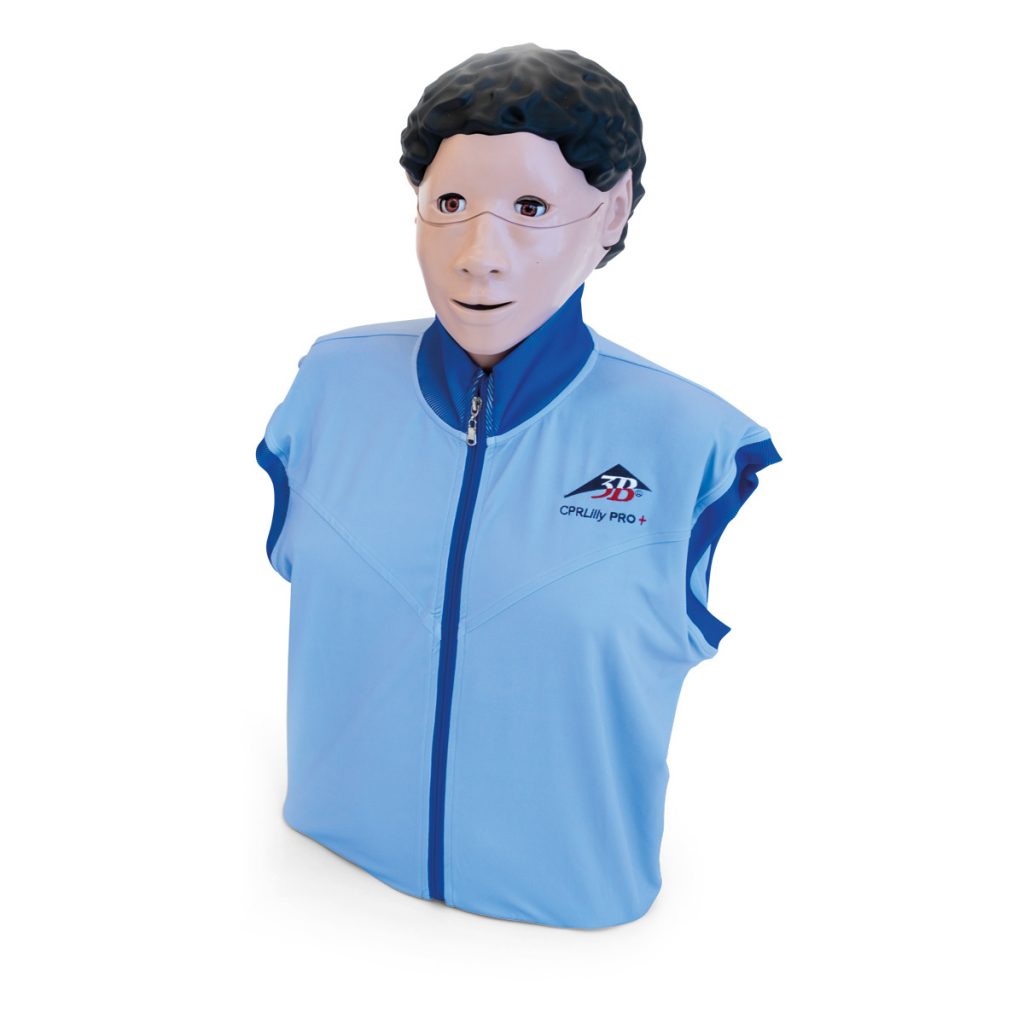
CPR Lilly Pro

This one lets you monitor up to 10 trainees at a time and give real-time objective feedback through the CPRLilly app, increasing effectiveness and efficiency of your course. Trainees can also see their performance in real-time. And the LED lights under the neck give direct feedback and indicate the correct compression parameters of depth, release, and rate. This manikin is extremely durable and easy to clean.

Life/form Basic Buddy Plus Convenience Pack powered by Heartisense

Anatomically realistic AHA-compliant CPR manikin with real-time feedback and easy head-tilt/chin-lift for airway. This manikin is simple to assemble and maintain, and enables effective training with apps and sensor kit. With head-/chin-tilt, you have an open airway, and it’s also easy to simulate an obstructed airway. The Xiphoid process also provides anatomical reference points for hand placement and compressions.

Airway Larry with Heartisense

This CPR manikin provides real-time feedback for compressions and ventilations for up to 6 manikins at a time, and comes with apps and a sensor kit that can be attached to a CPR -feedback-lacking manikin.

Life/form AED Trainer with Basic Buddy CPR Manikin

This universal AED trainer can help prepare students for what to do during emergency “shock” and “no shock” situations at the push of a button. There are four training scenarios for manual and hands-free training. This manikin is inexpensive, and the lung/mouth protection systems are disposable, so no risk of cross-contamination!

Life/form NG Tube & Trach Skills Simulator

This realistic simulator helps practice vital tracheostomy skills, gastrointestinal skills through nasal and oral access, and care for patients with respiratory conditions. It perfectly simulates the trachea, esophagus, lungs, stomach, and other landmarks. And if you add methyl cellulose to water, you can simulate mucous-like fluids of a real patient to add to the lungs and stomach.

Economy Adult Airway Management Trainer

A detailed adult intubation head so trainees can practice advanced airway management and intubation skills such as endotracheal intubation and nasotracheal intubation, gain anatomy knowledge and recognition, learn to use field emergency airway adjunct tubes like LMAs and Combitube, and learn to secure, suction, and maintain the installation.

These soft, flexible lifesize manikins are an essential in CPR training. The trainee can compress its chest and breathe air into the manikin, learning vital skills along the way, depending on the manikin he is working on. If you are confused about which manikins to get for your CPR training, look no further, because these are the staples of the CPR manikin world.

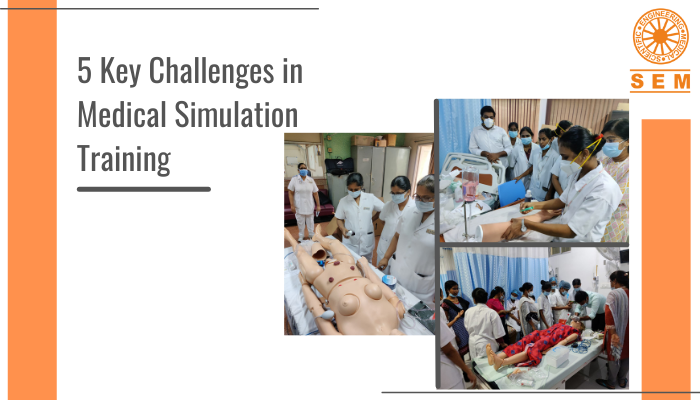
5 Key Challenges in Medical Simulation Training

The application of simulation in medical training has revolutionized how we approach healthcare and how we train our future doctors. It provides learners with a safe environment to get some hands-on practice. It spares real patients the discomfort of being attended by freshers. Simulation in medical training also creates better doctors and medics, furthering the stance and quality of healthcare in the world.

medical simulation model

But like everything else, medical simulation training comes with its own challenges. Today, we will talk about the 5 most common challenges faced by technicians in medical simulation.

Insufficient psychological fidelity/ realism

The whole purpose of simulation-led training is to provide learners with a realistic scenario so that they can learn better and afford to make mistakes in a safe environment. If they can’t perceive the simulation to be a believable environment, it might not be as effective. When we use realistic manikins and set up realistic scenarios that replicate the nuances of the real process, not only do students learn better, they develop critical decision-making and ad-hoc skills. Realism helps learners take it more seriously.

Cost

Better learning comes at a cost. A major roadblock in implementing simulation-led medical training is the expense of it all. Medical manikins and simulators are expensive. You also need to compensate the actors (depending on the kind of simulation you are going for). And then there are the expenses for the buildings, equipment, furniture, salaries, consumables, refreshment, allowances, transportation, electricity, laundry, course design, and many more resources. So while simulation-led training has proved to be more effective than conventional methods, when it comes to the fidelity-cost trade-off, you need to make the choice.

Lack of trained instructors

A simulation-led training program is only as effective as the instructor. The lack of trained instructors able to teach through simulation is another roadblock to training medical aspirants through simulation. A good instructor will be able to utilize the potential of simulation-based training to teach important skils, and build various soft skills like communication, decision-making, and critical thinking skills. He will also be able to employ effective debriefing techniques to provide immediate feedback and encourage learning.

Building team skills

There are some things you only learn by working in a team. Because simulation training focuses on building individual skills, it misses out on the fact that in the real world, doctors won’t be working on a patient alone- they will need team skills. They will need to get along and communicate effectively, appreciating the contribution of the rest of the team.

Keeping it interesting

Debriefing is often seen as the most important part of simulation-led medical training. However, focussing largely on assessment can quickly turn a possibility for a hands-on, safe learning experience with opportunity for genuine inquiry into a dreaded responsibility that learners need to get out of the way. To a learner, simulation-led training is supposed to be a risk-free learning environment. And even though a situation may be risk-free to a patient, a learner is still exposing his lack of knowledge and experience to his instructors and his peers. By laying out the rationale, ground rules, parameters, and risk beforehand, an instructor can minimize performance stress and make this process easier on the learner, allowing the simulation to fulfil its purpose- that of better learning.

These challenges, among others, might just be why simulation healthcare training isn’t as widely accepted yet. When all the different challenges of simulation-led medical training are addressed, the results can be astonishing.

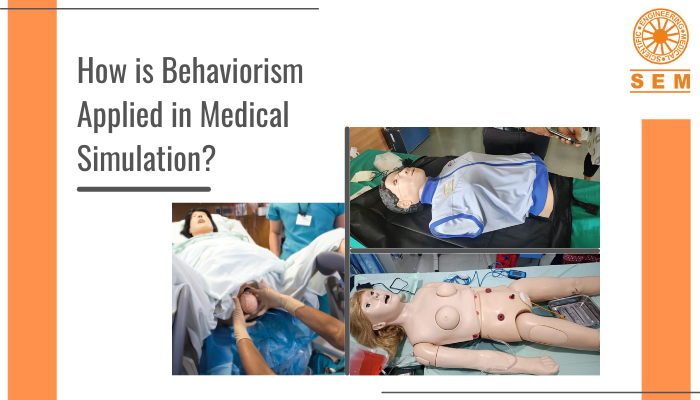
How is Behaviorism Applied in Medical Simulation?

Research has time and again proved the effectiveness of the use of simulation in medical training. And because it is so expensive with so many costs factoring in, it is important to make it more effective in what it does. Since learning is the goal of simulation-led training, one way to do this is to integrate learning theories into the process. In this blog, we will talk about how behaviorism is applied in medical simulation to increase its efficiency.

behaviourism in medical simulation

What is Behaviorism?

Everyone learns differently- we all have different learning styles. Learning theories are concerned with how we learn, process, and remember. One such learning theory is behaviorism, a theory that suggests that all learning is acquired through conditions. Learning (behavior) is either a reflex to an environmental stimulus or a consequence of our history. Learning happens when connections are made between environmental stimuli and a person’s responses that follow. So when we manipulate the stimuli, we can alter behavior through learning.

So how does this apply to learning?

We can make use of the concept of behaviorism and the consequences of behavior by encouraging learning through reinforcement and punishment (both positive and negative). As suggested by operant conditioning, a response is controlled by its consequence. With strategies like positive reinforcement, responding to an action with a desirable consequence can create a positive association and encourage repetition of the action. When learners repeatedly practice critical skills in a safe simulation environment, they learn and remember better. Also, when the instructor gives him immediate feedback- whether it’s a reinforcement or a punishment, it drives operant conditioning and changes his response. So, reinforcement will encourage him to make the right choice again, and punishment will discourage him from making the wrong choice the next time. Another technique is systematic desensitization, in which fear and anxiety are reduced by repeated exposure (because fear is learned, it can be unlearned).

How to apply behaviorism to medical simulation?

Here are a few things you can do to improve the learning experience:

  • Simulation runs better when you have prepared everything in advance. If you can design a simulation focusing on a specific psychomotor skill, while cutting out distractions and other factors, you will be utilizing the principles of behaviorism. As cognitive demand will decrease, the learner will be able to completely focus on the one skill, and the instructor will be able to measure results directly.
  • Capitalizing on operant conditioning, if as an instructor, you provide immediate feedback, you can reinforce the learner’s actions. This feedback can be verbal or tactile, with equipment like high-fidelity manikins. These realistic manikins (many of them have screens) deliver immediate feedback, allowing the learner to correct mistakes and improve performance in real-time.
  • Another behaviorism strategy is to employ repetition. When learners get to practice again and again in a simulated environment, they get many chances to associate behaviors and consequences, and are reinforced. And it’s no secret that repetition helps you remember things!

A behaviorist approach can help build technical or psychomotor skills and cause a change in behavior. When the instructor shows specific desired behavior, learners observe the manner in which it must be performed, and then a certain rubric helps evaluate their performance and reinforce them.

CPR and AED Manikins – Importance & Range of Manikin Kits

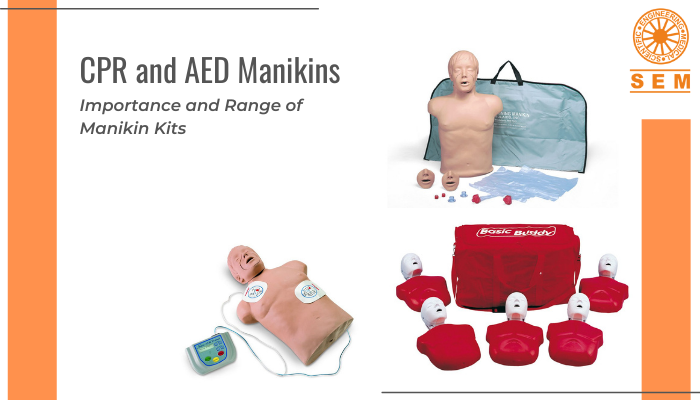
Manikins imitate real-life situations. They help in training for CPR, AED use, healthcare professionals instruction, disaster practice and much more. CPR (Cardiopulmonary resuscitation) training is a serious business. Proper training and Basic Life Support knowledge is of utmost importance whether it is a home emergency or a professional rescue. It is crucial learning to save lives. These days AED devices are commonly available in offices and public buildings as it is a sophisticated and easy to use medical device to analyse the heart rhythm. It also delivers an electrical shock or defibrillation to help the heart re-establish an effective rhythm.

There are plenty of CPR and AED training manikins on the market, but not all are created equal. Finding the right training manikins and CPR dummies are necessary to train CPR, AED use, advanced medical practices and rescue exercises. That’s why we carry a diverse selection of CPR dummies, manikins and automatic external defibrillator training manikins. SEM Trainers Manikins provide affordable 1 student to 1 manikin training in CPR, AED use, and the abdominal thrust maneuver. They are extremely lightweight, durable, and require minimal cleaning when used with the face shield. The manikin provides visual, tactual, and audible feedback to ensure proper technique.

CPR and AED Training Manikin Kits

Our catalogue includes top CPR and AED training manikin kits such as 3B Scientific’s Basic Life Support Simulator BASIC Billy+, ZOLL AED Trainer Package with CPR Brad, Nasco’s Life/form® AED Trainer with Basic Buddy™ CPR Manikin, and many others

Looking for a CPR manikin with feedback?
We’ve got you covered with EMS 2020 Award-Winning product; 3B Scientific’s Basic Life Support Simulator BASIC Billy +. This is functionally similar to other CPR kits but comes with an added functionality. The manikin connects with an app called heartisense. The Instructor App provides a detailed performance review of up to six manikins at a time while the Student App enables trainees to directly see and monitor their CPR performance in real-time.

CPR manikins are designed to give students the feel of what it is like to perform CPR. This unit from ZOLL comes with an AED trainer package and CPR Brad which allows students to practice operation and handling an identical graphical operator interface and complete audio and visual prompting realistic device without compromising AHA recommended training scenarios. Screen messages, audible tones, and voice prompts guide the user through all aspects of the rescue from arrival on the scene and calling for help to administer CPR and shock delivery. The convenient handheld remote control for instructor use is preprogrammed with the eight American Heart Association Heartsaver AED training scenarios and offers a manual scenario function, plus attach pads, low battery, and call-for-service simulations. The training unit is powered by six “C” cell batteries (not included) or an AC adapter. Supplied with training electrode kit, training remote control, AC adapter, handheld cord, operator manual, administration guide and carry bag.

To give more realism to the rescue scenario and instill more confidence in medical trainees, we have our award-winning and bestseller Nasco’s Basic Buddy™ CPR Manikin. It is an inexpensive and state-of-the-art manikin designed for teaching individuals or large groups the life-saving techniques of CPR. It is affordable and can be availed 1 for 1 student. This becomes a completely sanitary device due to disposable lung/mouth protection systems. The airway opens using the head tilt/chin lift method, and there is a visible chest rise when ventilated. The xiphoid process provides an anatomical reference point for hand placement and compressions. The manikin also features both adult and child capabilities. Basic Buddy™ manikin is simple to assemble and provides trouble-free maintenance. Consists of one manikin, 10 lung/mouth protection bags, one insertion tool, and an instruction manual. The kit comes with an AED trainer with a simple push button to set the sequence of events that will help students learn the appropriate steps to follow in both “shock” and “no shock” situations. The instructor can select from four training scenarios for manual and hands-free training. Once the scenario is selected, the trainer will prompt the student in appropriate actions and responses. The lightweight, compact trainer comes with reusable pads and electrode sets, 9V battery, and operating instructions. It is updated with Latest AHA Guidelines.

You can explore our range of CPR Manikins and enquire with us during regular business hours (8 am to 8 pm) at +91-8849563724 or mail us at [email protected]. Let our knowledgeable staff help you with any questions or concerns you may have. Teaching CPR is a noble endeavour. Learning CPR is easy when the instructor has the right tools. It is time for you to choose the best one.

Sem Trainers & Systems